Archive | savory RSS feed for this section

Dietetic Internship Ramblings + Ramen Noodles with Collards and Peanut Sauce

5 Oct

For the next year, I will be rotating around New York City, interning with registered dietitians (RDs) at various organizations, businesses, and clinics. I must complete this internship year and pass an exam in order to obtain my license as an RD.

As a dietetic intern, I have to complete a certain number of hours in a community nutrition setting, a clinical nutrition setting, and a food service nutrition setting. From September through December, I intern at three different community nutrition sites for five weeks at a time. In the spring, I do a 15-week clinical rotation, and next summer, I do a food service rotation.

I am currently four weeks into my first community nutrition rotation, and I love it! I work with clients who have HIV/AIDS. Some of the tasks performed at this five-week rotation include: Continue reading

Homemade Miso Ramen

29 Sep

Processed with VSCOcam with f2 preset

After spatchcocking a chicken the other night (recipe here), I saved the backbone to make a chicken stock.

To make a light chicken stock: Place the backbone and a few other chicken bones/discards into a pot with a chopped carrot, onion, and celery stalk and cover with water. Let it come to a boil and then reduce the heat and simmer for about an hour, partially covered. Drain the solids out and you get a beautiful homemade chicken stock. Salt to taste. Skim some fat off during simmering or after refrigeration.

I was contemplating a recipe to make that would let the homemade chicken stock shine, and my boyfriend suggested/challenged me to make ramen. Genius! Sometimes I need a little outside input to get my creative juices going again.

And guess what? Making ramen at home was not as scary as I thought it would be.

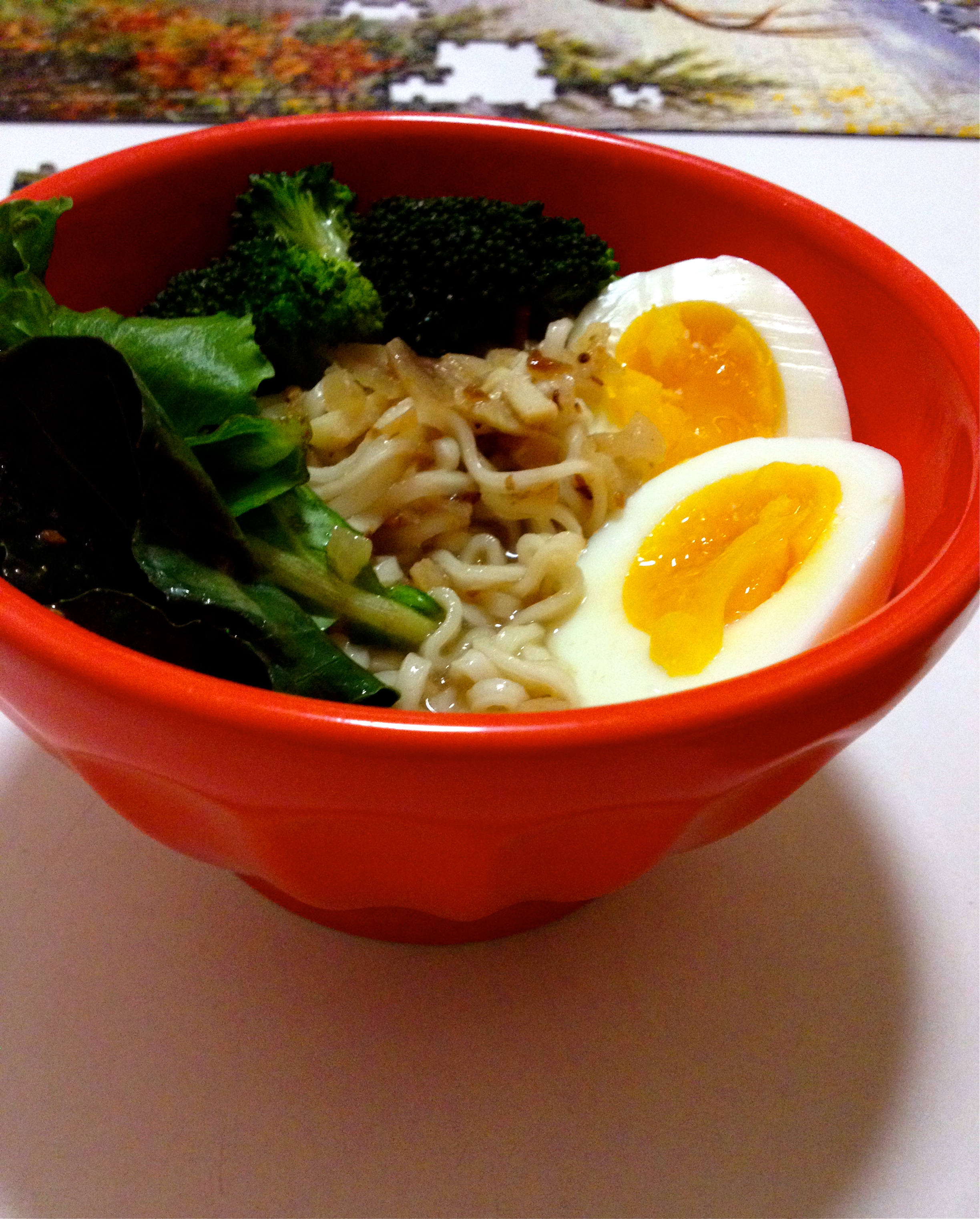
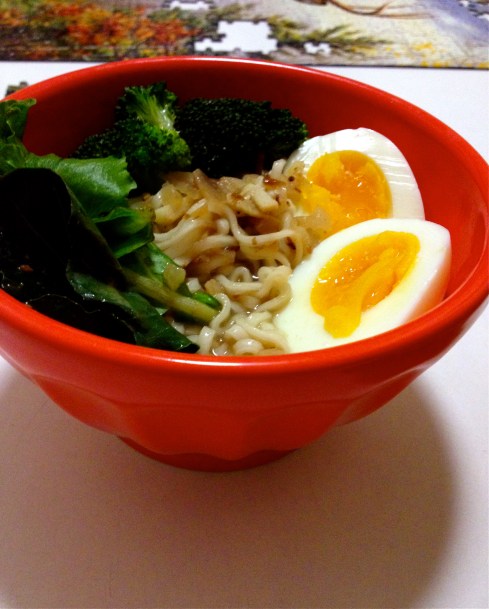
Granted, I made a somewhat simplified version compared to what one might find at a Japanese ramen shop, but I appreciate my less salty, vegetable-topped ramen for it’s purpose as an amped-up dinner at home. Having the chicken stock already prepared from the day before saved me a lot of time, too.
IMG_3672

I cooked all of the components of the ramen dish separately, but I was multitasking the whole time and only used 2 pots in the process. As the miso broth was simmering, I made 7-minute eggs* and set them in an ice bath while I steamed some broccoli and boiled my ramen noodles (eggs, broccoli, and noodles were all cooked in the same pot at different times). I kept everything separate until serving.

To serve the ramen, I placed cooked noodles in the bottom of a serving bowl. Then I ladled in hot broth and placed egg halves and vegetables on top.

*This was also my first time making a medium or 7-minute egg. It was so good, I need to do this more often.

IMG_3669

I had broccoli and greens on-hand at home. Use whatever seasonal vegetables you want. Also, you could add some ground pork or chicken to this recipe after sautéing the shallot/garlic/ginger. Cook until no longer pink and then add the miso/bean/sesame and follow the rest of the recipe.

Homemade Miso Ramen

adapted from Just One Cookbook

makes 2-3 servings

For the broth:

1 shallot or a small onion

2 garlic cloves

1 1-inch piece of fresh ginger

1 tablespoon sesame oil

3 tablespoons white miso paste

1 teaspoon fermented black bean paste (not super spicy) or chili bean paste/La Doubanjiang (spicy)

1 tablespoons crushed sesame seeds

4 cups chicken stock, homemade if you have it (or vegetarian stock or water)

Noodles:

2 servings of packaged ramen noodles (do not use any of the powders or sauces that come with)

Toppings:

7-minute boiled eggs

steamed broccoli

fresh greens

more “authentic” might be: pickled red ginger, nori (seaweed), bean sprouts, corn, scallion, Japanese chili oil, pork or chicken

Directions: 

Finely chop the shallot and garlic. Mince the ginger with a microplane.

Heat the sesame oil in a pot. Add the garlic, shallot, and ginger and cook for about 2-3 minutes. Add the miso, bean paste, and crushed sesame seeds and stir. Add a little of the chicken stock to deglaze the pan and smooth out the miso paste, then add the rest of the chicken stock and stir. Simmer this while you prepare the remaining ingredients.

-Make your eggs. Bring a small pot of water to a boil. Set two eggs on a large spoon and gently set them into the boiling water. Set the timer for 6 minutes, then spoon the eggs out of the boiling water and into an ice bath.

-Next, set a steamer over the same water you used to boil the eggs. Steam the broccoli, covered, for about 4 minutes. Set aside.

-Using the same pot you boiled the eggs and steamed the broccoli in, bring water to a boil and cook the ramen noodles for about 3 minutes.

To serve:

Spoon cooked ramen noodles into serving bowls. Ladle the miso broth on top of the noodles. Place your toppings–eggs, steamed broccoli, fresh greens–over the broth and noodles. Enjoy!

Cauliflower “Rice” Sauté: Food For the Summer-Fall Transition

25 Sep

Processed with VSCOcam with f2 preset

Making Cauliflower Pesto a few weeks ago turned me on to a whole world of cauliflower possibilities.

My post-pesto experiment? Rice! Or couscous, or whatever you want to call the small, fluffy tufts of pulsed, grated cauliflower.

The below links provided me with some background and technique on making grain-like cauliflower salads:

The Kitchn provides an easy how-to tutorial on cauliflower couscous

Food52 makes an easy spiced couscous with cumin, za’atar, and lemon

Joy the Baker turns colorful cauliflower  into a rice burrito bowl

The First Mess knows how to make a mean “rice and peas” with all of the best crunchy elements

Clearly, I wanted to be among those in the use-cauliflower-like-a-grain club. So, I picked out the biggest head of cauliflower at the farmer’s market and set to work.

An efficient person would likely use a food processor or blender to pulse the cauliflower into tiny pieces. I, on the other hand, used my box grater, justifying the mess I made all over the counter and the floor as a yearning for the old-fashioned and an excuse to exercise my arm and core muscles. To make less of a mess when grating my hand, try setting the box grater in a large bowl to catch fly-away cauliflower bits.

The cauliflower “rice” can be eaten raw, but I prefer it lightly sautéed.

Use the “rice” plain as a bed for a curry, or stir the “rice” into some seasonal vegetables and add-ins to create a full meal.

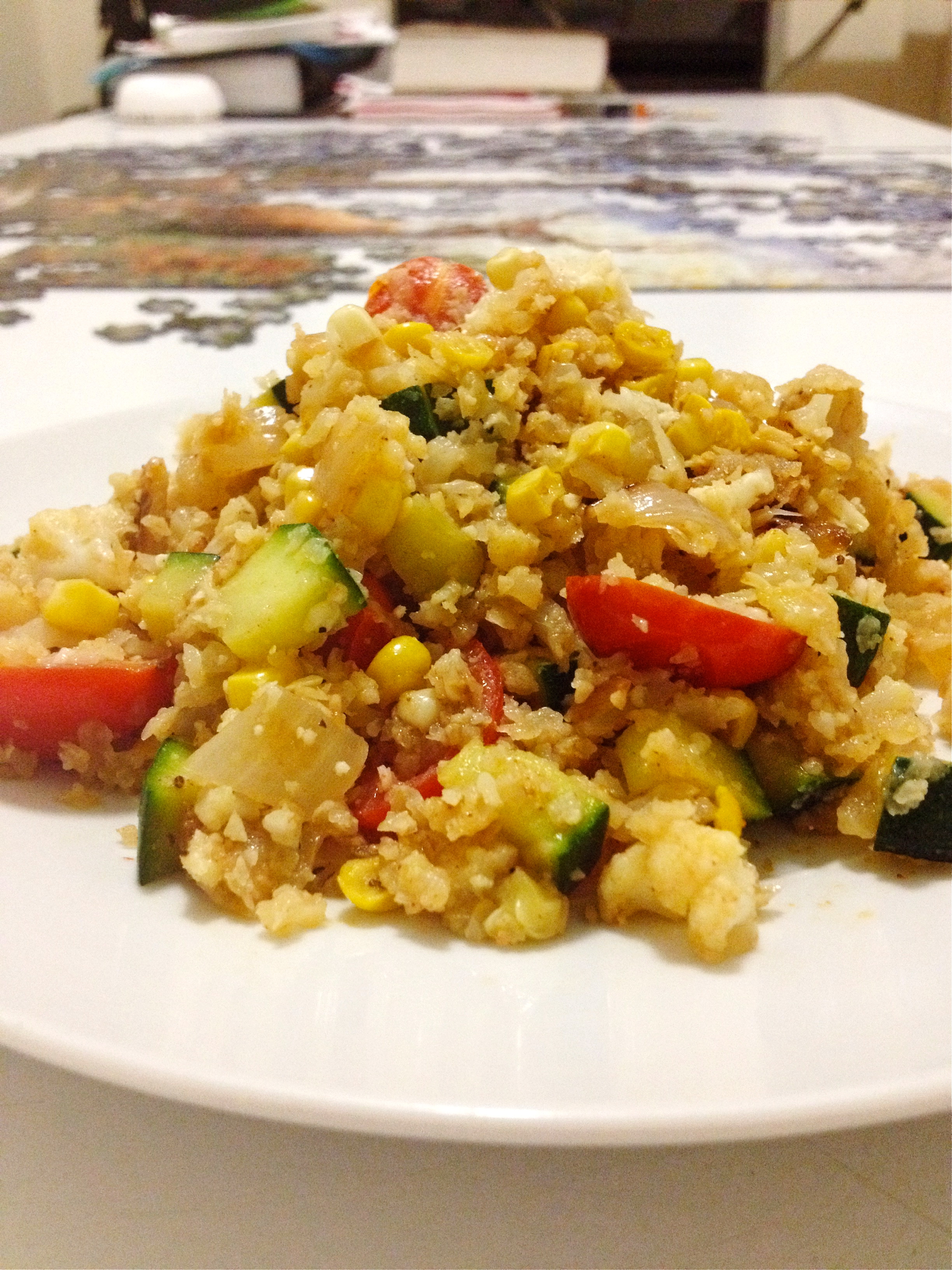
I cooked up some onion with zucchini, corn, and tomato, and mixed in the cauliflower “rice” with some chili powder, paprika, and my friend Amy’s uncle’s special Maryland spice blend (you can use something like Old Bay). Shave some Parmesan on top if you want. I took this for lunch every day this week, sometimes adding a little avocado or hummus on top to make things interesting.

Cauliflower is hot, hot, hot right now, as it should be. Jump on board.

Cauliflower “Rice” Sauté: Food For the Summer-Fall Transition

1/2 very large or 1 regular size head of cauliflower

1 tablespoon oil, olive or canola

1 small onion, chopped

1 small zucchini, chopped small

1/2 cup small tomatoes, sliced in half or quartered

1 ear corn, sliced off the cob

1 teaspoon each: chili powder, paprika, Old Bay

salt and pepper, to taste

optional: fresh grated Parmesan cheese and/or hot sauce

Wash the cauliflower and take off the stalk and leaves. Cut or tear the cauliflower into large florets. In batches, pulse the cauliflower florets until finely chopped and they look approximately the size of rice or couscous. **You can also use a box grater to grate the florets by hand. You should get about 4 cups, more or less. Set the “rice” aside.

In a large skillet, heat the oil over medium-high heat. Add the onion and sauté for 2-3 minutes. Add the zucchini, corn, and tomatoes and sauté for another 5 minutes.

Slowly toss the cauliflower “rice” into the skillet with the spices. Continue cooking everything for another few minutes. Taste and add salt and pepper as needed. Finish with Parmesan and/or hot sauce.

Spaghetti with Cauliflower Pesto

6 Sep

Processed with VSCOcam with f2 preset

She’s a beaut, right?

Obviously I could not resist lugging home a head each of orange and purple cauliflower on top of my already heavy farmer’s market haul of melon, tomatoes, summer squash, eggs, and my newest obsession, maple cream!

I am such a sucker for roasted cauliflower. I love how it gets those golden-brown roasted marks, and packs a salty, slightly oily bite. But, it is important to try new things, and there is SO much happening with cauliflower these days.

I thought about making a purple cauliflower soup or a cauliflower gratin, but, desperate to hang on to the summer, I was not yet ready to dive into those cozier, creamier fall foods. After tossing around ideas of the ever-trendy cauliflower rice/couscous, cauliflower pizza crust, and cauliflower pasta sauce, I turned to my trusty food maven, Deb Perelman, who has a recipe in her cookbook for…CAULIFLOWER PESTO.

Processed with VSCOcam with f2 preset

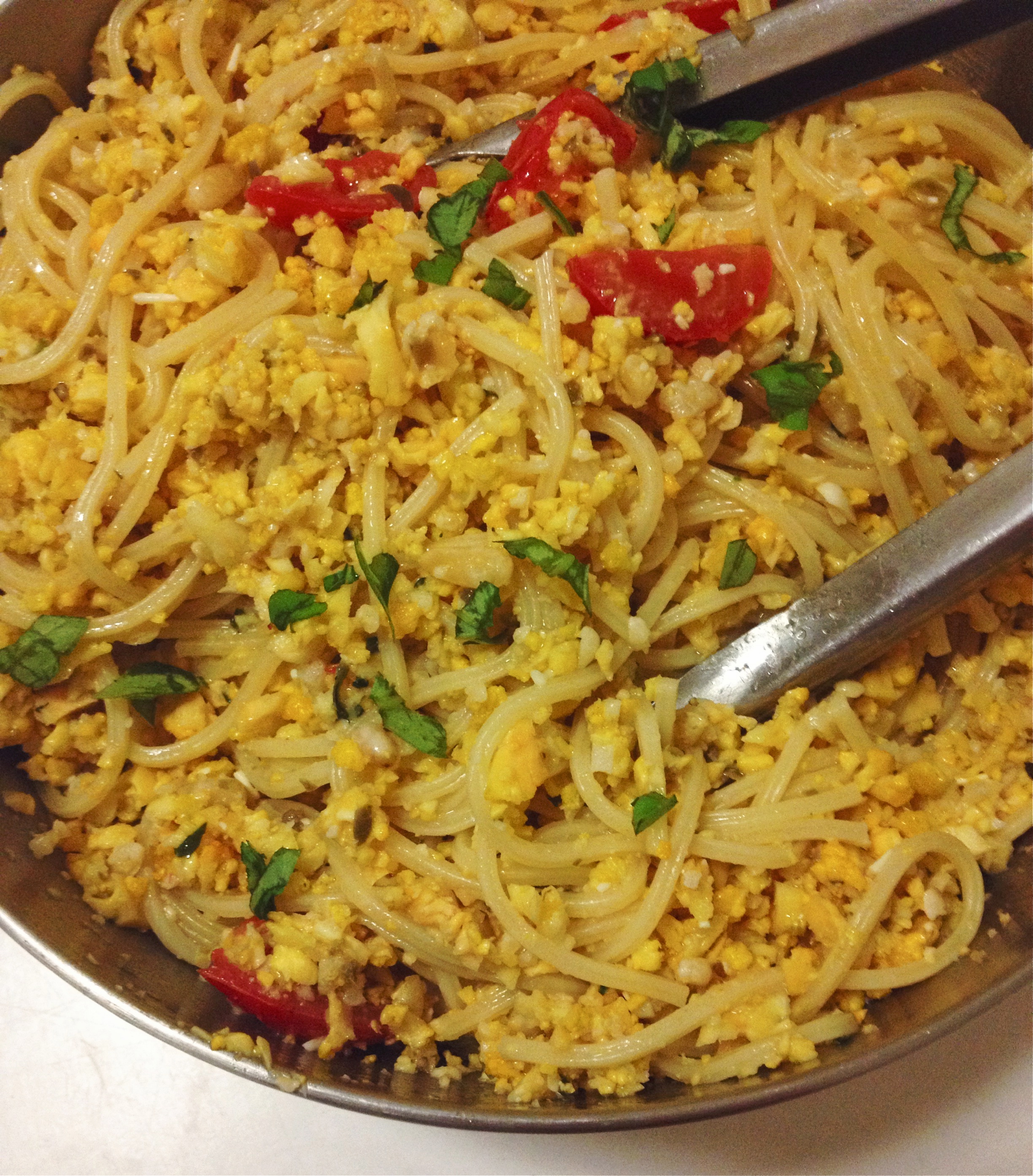
Cauliflower pesto is made with raw cauliflower pulsed in a food processor (I took the Italian grandmother way/the hard route and hand-chopped/used my blender) and combined with a separate pulsed mix of brine-y, pesto-y ingredients: capers, garlic, Parmesan, pine nuts, herbs. Continue reading

Home Fries

28 Jul

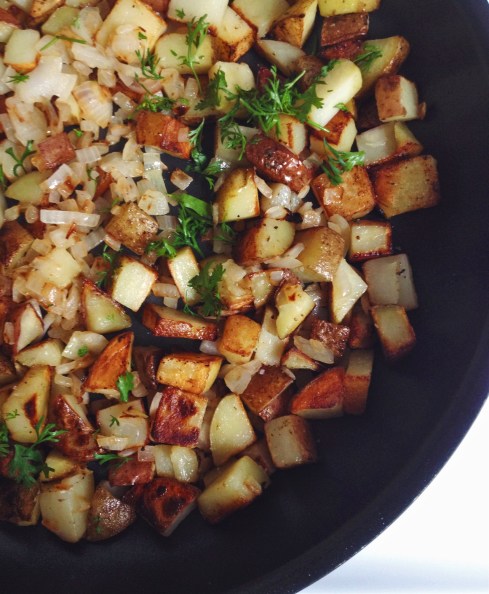
My friend and her family generously gave me some of their surplus potatoes and home-grown herbs and onions a few days ago. When I got home, I set to work steeping an ample bunch of lemon balm leaves with lemon verbena tea bags to make a pitcher of iced tea. Then, I graced my kitchen with cilantro-studded home fries.

Processed with VSCOcam with f2 preset

When I lived in the Bay Area, I used to be okay with battling the crowds and going out for a big weekend brunch complete with eggs, home fries, maybe a muffin, and always coffee.

Oh, New York. Why does it seem like every brunch place here serves french fries with eggs? There is the occasional potato pancake or limp hash-brown, but rarely, if ever, a home fry. Maybe I just live in the wrong part of town for home fries? If anyone out there has a good spot for New York City breakfast potatoes, let me know. Until then, you can find me in my kitchen on weekend mornings, creating what I feel is a proper weekend breakfast.

Processed with VSCOcam with f2 preset

The trick to making these home fries at home is to use the microwave (if you do not have a microwave, you can boil your potatoes first). Wash the potatoes, chop the potatoes, and place the potatoes covered in the microwave. This gets them par-cooked before they hit the pan to get crispy outside and remain soft inside.

The second trick is to cook the onion separately from the potatoes and to add the onion back in at the end. Since the potatoes cook much longer than the onion, taking the onion out and then adding the onion back at the end prevents the pieces from charring.

Naturally, home fries are excellent with eggs. If the season is right, I recommend slicing some baby tomatoes in half, salting them, and mixing them in with the eggs. I scrambled my eggs, but a poached or a flipped egg  with the runny yolk seeping into the potatoes is another option. If you are not into eggs, home fries + beans or home fries + fish or home fries + sausage or home fries + salad are a few of many ideas.

Sprinkle with a liberal amount of salt and pepper. Hot sauce optional.

Home Fries

recipe from the always reliable and lovely Smitten Kitchen

makes about 4 servings

You can use all butter, or you can use a mix of canola oil and butter. I dialed down the butter slightly compared to the original recipe. Like me, start with less, and add more if you like. 

1 1/2 pounds potatoes

1 onion, chopped

3 tablespoons butter, divided (or a mix of butter and canola oil)

salt and pepper, to taste

optional: fresh cilantro

Arrange potatoes in large microwave-safe bowl or large plate, top with 1/2 tablespoon butter, and cover with another plate. Microwave on high until edges of potatoes begin to soften, 5 to 7 minutes, shaking (without removing the cover plate) to redistribute potatoes halfway through cooking.

Meanwhile, melt 1/2 tablespoon butter in large skillet (I used non-stick) over medium heat. Add onion and cook until softened and golden brown, about 6 minutes. Transfer to small bowl.

Melt remaining 2 tablespoons butter (or do half butter half canola oil) in the now empty skillet over medium heat. Add potatoes and pack down with spatula. Cook, without moving, until underside of potatoes is brown, 5 to 7 minutes. Turn potatoes, pack down again, and continue to cook until well browned and crisp, 5 to 7 minutes. Reduce heat to medium-low and continue cooking, stirring potatoes every few minutes, until crusty and golden on all sides, 9 to 12 minutes (at this point, if you are making eggs to go with your potatoes, start them now). Stir in onion and salt and pepper to taste. Sprinkle with cilantro, if using.