Archive | gluten-free RSS feed for this section

Honey Lavender Ice Cream

15 Aug

Processed with VSCOcam with f2 preset

I just made a batch of Smitten Kitchen’s Maple Cluster Granola. She uses an egg white in her recipe as a protein “glue” that creates wonderful clusters. Genius. Since I have a “nothing to waste” attitude, I saved the yolk and immediately made room in the freezer for my Cuisinart ice cream bowl.

As I was putting the container of fresh-baked granola away in the pantry, I re-discovered my bag of Culinary English Lavender (grown in Long Island). With lavender, a little goes a long way, so I always have what feels like an endless supply of purple buds.

And so, Honey Lavender Ice Cream.

IMG_1145

I just got back from a trip to visit California’s Bay Area and Sierra Mountains. Lavender seems to grow wild there, and in many other places, so if you have fresh lavender accessible, skip the purchased bag and go pick some!

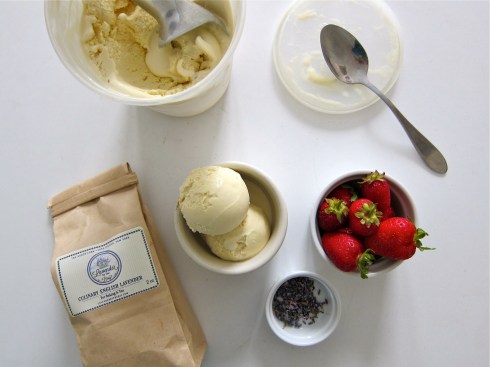
This ice cream smells and tastes like a delicate flower, in a good way. I am almost tempted to lather a cold honey-lavender-ice-cream-mask all over my face, but the temptation to just eat the ice cream is much greater.

(psst…since we are on the subject, have you ever tried Dr. Bronner’s Lavender soap? It’s my favorite!)
IMG_1143

Pair the ice cream with fresh strawberries or white peaches. Or serve it over your favorite summer fruit crumble, cake, or pie.

IMG_1149

Find more Figs in my Belly ice cream recipes and flavors in the Recipe Index.

Honey Lavender Ice Cream

adapted from Bakeology by Lisa, using David Lebovitz technique

I used 1% milk and one fewer yolk than the original recipe because it was convenient for me and a touch healthier, without compromising on taste or texture

  • 1 cup milk (I used 1% milk, but you could use whole if you want)
  • pinch of Kosher salt
  • 1/2 cup honey
  • 2 tablespoons culinary lavender
  • 2 cups heavy cream
  • 4 egg yolks (large or extra large work fine)

Place the bowl of an ice cream maker in the freezer for at least 24 hours.

Place the milk, salt, honey and lavender in a small pot and heat, stirring with a rubber spatula, until just scalding. Turn off the heat, cover, and let the mixture infuse for one hour.

Meanwhile, place the heavy cream in a bowl and place a mesh strainer over the top. Set the bowl of heavy cream into a larger bowl. Surround the larger outside bowl with ice water.

After an hour, re-warm the milk/salt/honey/lavender mixture. Mix the egg yolks in a small bowl. Very slowly and stirring constantly with either  a whisk or a rubber spatula, pour some of the milk mixture (about 1/2 cup) into the yolks.  Pour this mixture back into the pot with the remaining milk mixture. Continue to cook the custard over low heat, stirring constantly, until it thickens enough to coat the back of a spoon.

Once thickened, pour the custard through the mesh strainer into the bowl of cream sitting in the ice water bath. Stir everything together and let it sit in the ice water bath until the ice cream base is chilled. Once chilled, refrigerate the mixture for a few hours. Churn it in the ice cream maker according to the manufacturer’s instructions.
Home Fries

28 Jul

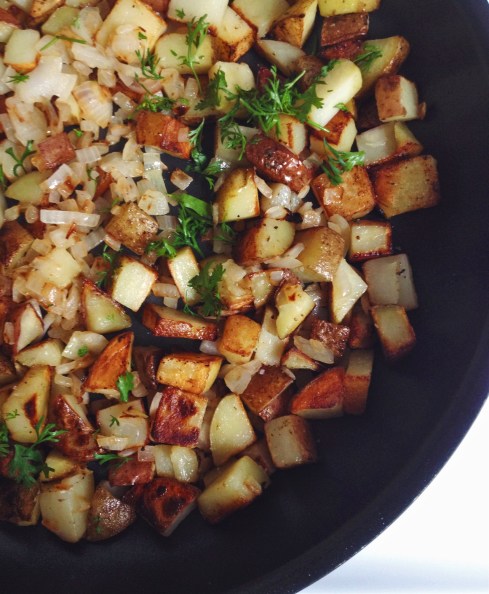
My friend and her family generously gave me some of their surplus potatoes and home-grown herbs and onions a few days ago. When I got home, I set to work steeping an ample bunch of lemon balm leaves with lemon verbena tea bags to make a pitcher of iced tea. Then, I graced my kitchen with cilantro-studded home fries.

Processed with VSCOcam with f2 preset

When I lived in the Bay Area, I used to be okay with battling the crowds and going out for a big weekend brunch complete with eggs, home fries, maybe a muffin, and always coffee.

Oh, New York. Why does it seem like every brunch place here serves french fries with eggs? There is the occasional potato pancake or limp hash-brown, but rarely, if ever, a home fry. Maybe I just live in the wrong part of town for home fries? If anyone out there has a good spot for New York City breakfast potatoes, let me know. Until then, you can find me in my kitchen on weekend mornings, creating what I feel is a proper weekend breakfast.

Processed with VSCOcam with f2 preset

The trick to making these home fries at home is to use the microwave (if you do not have a microwave, you can boil your potatoes first). Wash the potatoes, chop the potatoes, and place the potatoes covered in the microwave. This gets them par-cooked before they hit the pan to get crispy outside and remain soft inside.

The second trick is to cook the onion separately from the potatoes and to add the onion back in at the end. Since the potatoes cook much longer than the onion, taking the onion out and then adding the onion back at the end prevents the pieces from charring.

Naturally, home fries are excellent with eggs. If the season is right, I recommend slicing some baby tomatoes in half, salting them, and mixing them in with the eggs. I scrambled my eggs, but a poached or a flipped egg  with the runny yolk seeping into the potatoes is another option. If you are not into eggs, home fries + beans or home fries + fish or home fries + sausage or home fries + salad are a few of many ideas.

Sprinkle with a liberal amount of salt and pepper. Hot sauce optional.

Home Fries

recipe from the always reliable and lovely Smitten Kitchen

makes about 4 servings

You can use all butter, or you can use a mix of canola oil and butter. I dialed down the butter slightly compared to the original recipe. Like me, start with less, and add more if you like. 

1 1/2 pounds potatoes

1 onion, chopped

3 tablespoons butter, divided (or a mix of butter and canola oil)

salt and pepper, to taste

optional: fresh cilantro

Arrange potatoes in large microwave-safe bowl or large plate, top with 1/2 tablespoon butter, and cover with another plate. Microwave on high until edges of potatoes begin to soften, 5 to 7 minutes, shaking (without removing the cover plate) to redistribute potatoes halfway through cooking.

Meanwhile, melt 1/2 tablespoon butter in large skillet (I used non-stick) over medium heat. Add onion and cook until softened and golden brown, about 6 minutes. Transfer to small bowl.

Melt remaining 2 tablespoons butter (or do half butter half canola oil) in the now empty skillet over medium heat. Add potatoes and pack down with spatula. Cook, without moving, until underside of potatoes is brown, 5 to 7 minutes. Turn potatoes, pack down again, and continue to cook until well browned and crisp, 5 to 7 minutes. Reduce heat to medium-low and continue cooking, stirring potatoes every few minutes, until crusty and golden on all sides, 9 to 12 minutes (at this point, if you are making eggs to go with your potatoes, start them now). Stir in onion and salt and pepper to taste. Sprinkle with cilantro, if using.

Drink Up! Green Smoothie

2 Jul

Processed with VSCOcam with f2 preset

Well I finally gave green smoothies a whirl at home, and…they’re great!

I first started adding just a small handful of baby spinach into a smoothie, but now I’ve expanded to kale and purslane.

A few weeks ago, I got a deal at the farmer’s market: two huge bundles of greens for $5. I bought collards and kale. I cooked the collards, and used some of the kale for salads.  I washed, de-stemmed and tore the remaining kale leaves into pieces and stuck them in a ziplock bag in my freezer (my friend Brianna gave me that genius tip!). Now I have a cold green leafy veggie in my freezer for when the smoothie pangs hit (I would imagine that frozen kale is easy to toss into a soup or pasta recipe, too).

Having frozen smoothie ingredients on hand  (i.e. chopped kale, chopped banana, frozen fruit) is key to keeping things cold. Sometimes I add ice at the very end to get the smoothie extra cold, but it is not always necessary.

If you are wary of the greens, don’t worry because you can’t taste them, especially if you use strong fruits like banana or mango and a nut butter like peanut or almond. The greens just make the smoothie turn, well, green.

Tip: blend the greens with the liquid first. Get it really nice and blended before adding in the remaining fruits and accouterment. This helps decrease the leafiness of the greens. I just use a regular blender.

A half portion of this smoothie fills me up in the morning when I drink it with coffee. I also make the full serving for a light lunch before a workout. Experiment with different greens and fruits and add-ins like chia seeds. Have fun, stay cool, and drink up!

Drink Up! Green Smoothie

Makes 1 large portion, or 2 small snack-size portions

1 cup of greens (I used 3/4 cup frozen kale and 1/4 cup fresh purslane)

1 cup liquid (I used 3/4 cup low-fat milk and 1/4 cup Greek yogurt)

1 heaping cup of fruit (I used about 1 cup frozen banana pieces and 1 poached fig)

1 heaping tablespoon nut/seed butter (I used peanut butter, but almond butter is great in smoothies, too)

optional: Ice

optional: a sprinkle of chia seeds (I didn’t use any in this smoothie because purslane is high in omega-3 fatty acids)

Blend the greens and the liquid in the blender. Get it nice and blended, may take 1-2 minutes. Next, add in the fruit and the nut/seed butter and the chia seeds (if using). Blend again to incorporate. If you want the smoothie extra cold, add in a few ice cubes and blend again. You can top the smoothie with extra chia seeds if you like.

 NOTE: The full recipe, if you use nut butter, could add up to 350-400 calories, making this smoothie more of a mini meal than a snack. 

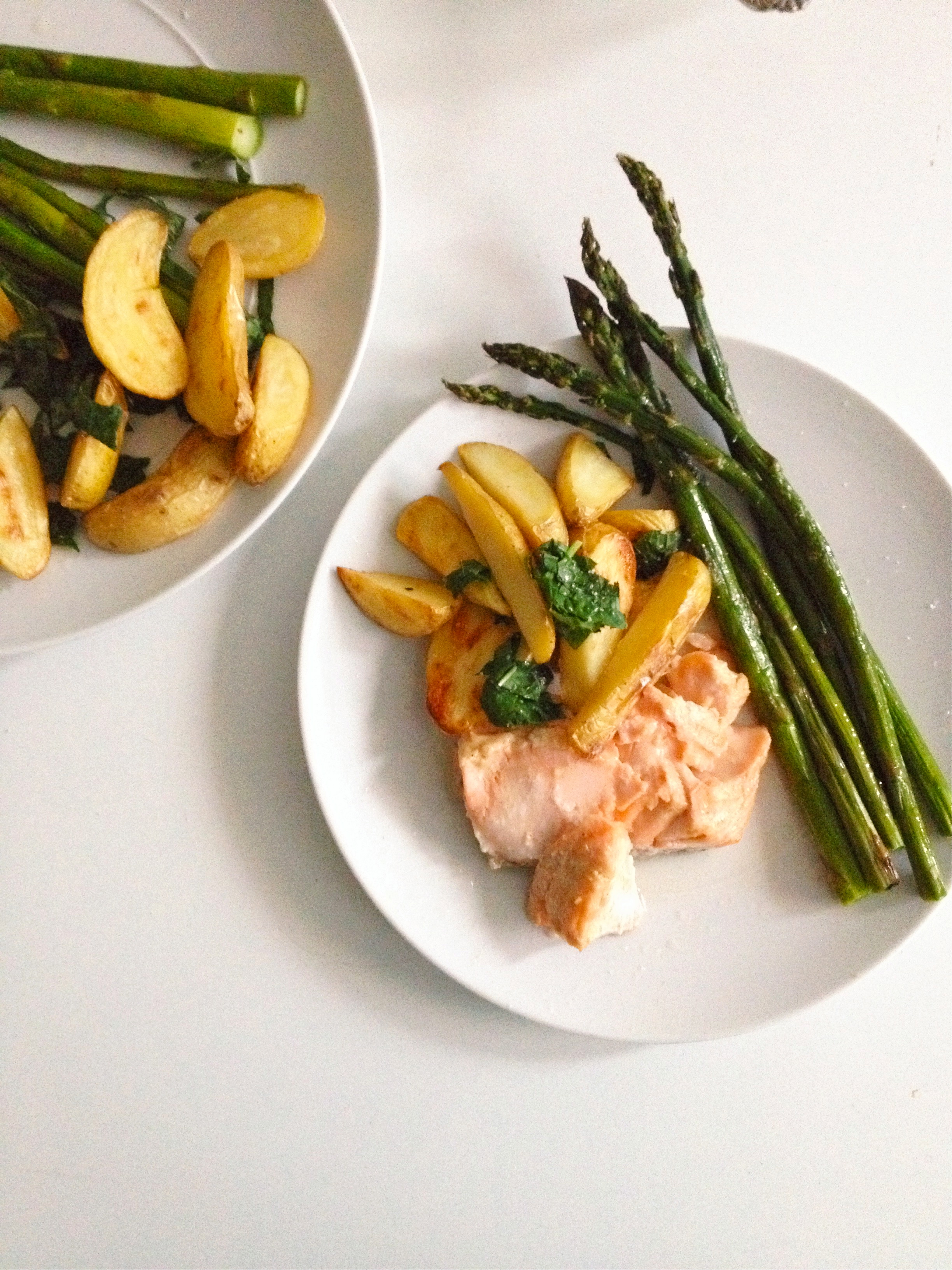
Mustard Roasted Salmon with Asparagus and Fingerlings

29 Jun

Processed with VSCOcam with f2 preset

It’s hot here in New York, but I am still turning on the oven…for now. The temperature has not yet escalated to the point where I refuse to be in the kitchen under heat. So, a simple, roasted dinner I made.

As per my last post, I am trying to incorporate more fish into my diet. Salmon is in season in the summertime, and the pink, fatty fish looks so nice next to green and gold asparagus and fingerling potatoes.

I was in the Upper West Side area on a Friday afternoon, and after seeing every other person on the street with a shopping bag from New York City’s famous Zabar’s, I just had to go in and pick up some fish for dinner.

Processed with VSCOcam with f2 preset

The vegetables were from the Columbia greenmarket. Fingerlings are one of my favorite potato varieties. They really do look like little fingers! I had some leftover kale ribbons, so I spread my roasted vegetables on a small bed of raw kale.

Processed with VSCOcam with c1 preset

A no-fuss oven to plate dinner.


Mustard Roasted Salmon with Asparagus and Fingerlings

The salmon served 2, the vegetables served 4 (I saved for leftovers the next day)…you can always adjust the amounts if you want 

For the vegetables:

1 bunch of asparagus, trimmed at the ends

10 fingerling potatoes, sliced in half the long way and sliced again if you want the smaller

1-2 tablespoon olive oil

salt and pepper, to taste

For the fish:

1 large fillet of salmon (about 1/4 pound)

1/2 tablespoon mustard

1 1/2 tablespoons olive oil

1/2 tablespoon red wine vinegar (or lemon juice)

a pinch of each salt and pepper

Preheat the oven to 400 degrees. Line a baking sheet with parchment paper.

Spread the potatoes on one half of the baking sheet, and the asparagus on the other half of the baking sheet in a single layer (if you can’t make a single layer, use 2 baking sheets). Drizzle the olive oil over the vegetables, tossing to coat. Sprinkle with a dash of salt and pepper (you can always use more later).

Roast the vegetables, checking after 10 minutes. The asparagus will be done before the potatoes. After 10-15 minutes, the asparagus will probably be done. Transfer the asparagus to a serving plate, re-distribute and spread the potatoes out on the baking sheet, and return the potatoes to the oven. They will cook for about 20 to 30 minutes more or until slightly golden and soft.

———-

Meanwhile, pat the salmon dry. Line your baking sheet (or pie pan!) with a rectangle of parchment paper. Place the salmon onto the parchment, skin side down.

Whisk together the mustard, olive oil, vinegar or lemon juice, and salt and pepper. Spoon it over the salmon (you may not need all of it, save the rest for a vinaigrette…just don’t double dip your spoon). Roast the fish in the oven for about 10-20 minutes, checking oven so as not to overcook the salmon.

Mustard Greens and Grits

25 May

Processed with VSCOcam with f2 preset

Let’s step away from the convenient pre-washed, packaged spinach for a minute. It’s greens season, and there are bunches and bushels of young spring greens awaiting you at your local farmer’s market.

I’ve been reading through Jo Robinson’s Eating on the Wild Side, and she makes an interesting point about modern greens:

“Over the course of ten thousand years of agriculture, our farming ancestors managed to remove the bitterness from most of our greens. Unwittingly, though, when they removed the bitterness, they were also stripping away a host of highly beneficial phytonutrients that happen to have a bitter, astringent, or sour taste. Our mild-to-a-fault iceberg lettuce, for example, has one-fortieth as many bionutrients as bitter dandelion greens. Calcium is bitter as well, so the calcium content of our modern greens is also relatively low.”

Robinson also notes that to tone down bitter flavors, fat can help. One might, for example, add some avocado to a salad with bitter lettuce greens. Another option: *~bacon~*

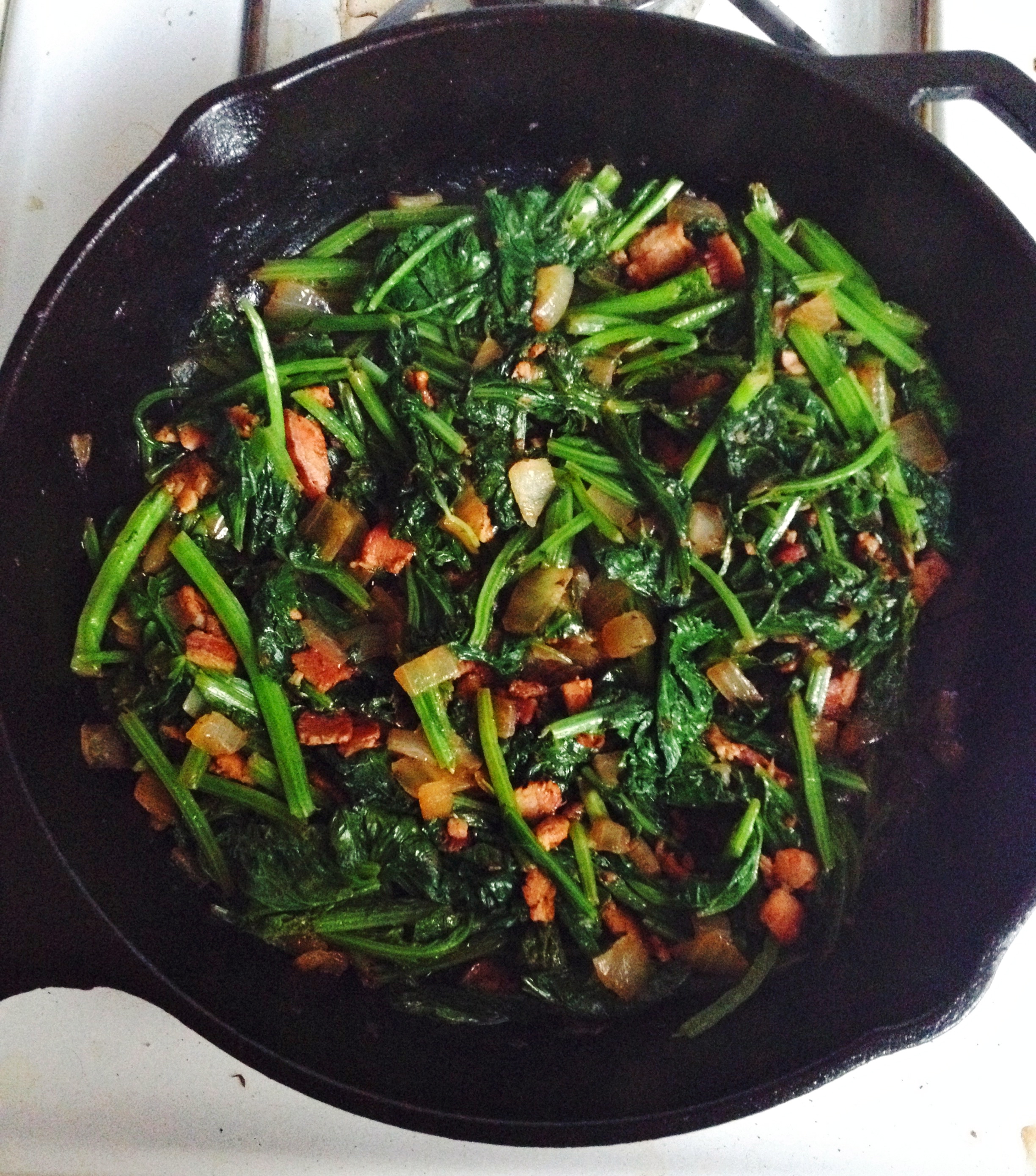
Bacon + mustard greens nudged with creamy yellow corn grits. Bitter-creamy-toothy-savory goodness. A real spring comfort.

IMG_2615

Bacon gets sizzled in a pan (cast-iron or dutch oven preferable). A little onion for a little more bite.

Processed with VSCOcam with f2 preset

In batches, throw torn mustard greens  into the pan. They cook down quite a bit, so d0n’t be afraid to add the entire bunch. Cover with a lid to let the stems braise in their own liquid.

Processed with VSCOcam with f2 preset

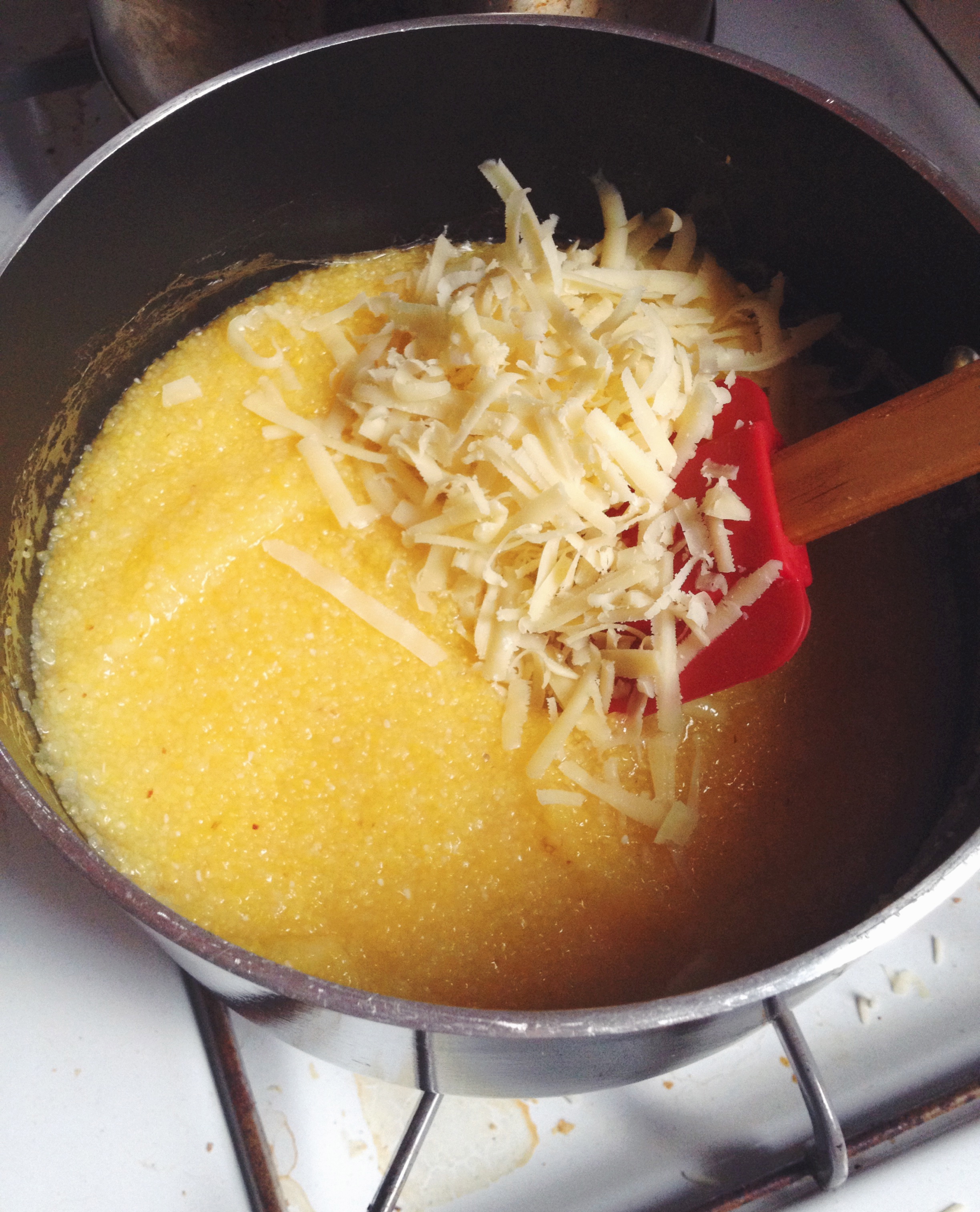
While the bacon braised greens get going, cook the grits. It’s a 1 to 4 grits to liquid ratio. I used water. Boil the water, add the grits, stir. Done in roughly 5 minutes. Finish with freshly grated sharp cheddar and a little pat of butter.

IMG_1136

Mustard greens with bacon and onion, nudged and nestled with fluffy yellow grits.

You’re welcome.

Quick Mustard Greens With Bacon

makes about 3-4 servings

4 slices bacon, diced (I used Brooklyn Cured bacon)

1 bunch mustard greens (from Migliorelli Farms), torn into smallish pieces

1 small onion, chopped

splash of red wine vinegar

pinch of salt

Heat a cast iron skillet over medium-high heat. Add the bacon and cook, stirring every so often to brown the bacon. Add the onion and cook for another few minutes. *I needed to add a dash of canola oil here because my bacon was very lean.

Add the mustard greens to the pan in batches and saute until just wilted. Turn the heat to low, cover the pan, and let it simmer for about 4-5 minutes, or until the greens have braised in their own liquid and the stems are slightly softened.

Uncover, add a splash of vinegar (helps reduce the bitterness of the mustard greens) and a pinch or two of salt. Serve nestled next to or on top of some creamy cheddar grits.


Cheddar Grits

makes about 4 servings

4 cups water

1 cup yellow corn grits (I used Arrowhead Mills Organic Yellow Corn Grits)

pinch salt

2-3 ounces grated cheddar

1 tablespoon butter

  • Bring water to a boil. Slowly add in the grits, stirring constantly. Reduce the heat to low, and stir for about 5-6 minutes or until thickened slightly and cooked.
  • Once the grits are cooked, add in a pinch of salt, the grated cheddar, and the butter. Stir to incorporate and melt.

IMG_1137