Yogurt Chia Parfaits

1 Aug

Processed with VSCOcam with f2 preset

I bought a 24-pound watermelon. Luckily, I purchased this fruit-the-size-of-a-small-child at my corner store, so I only had to carry the monster up one block. Yes, I know that smaller watermelons exist, but I wanted and I needed and I had to have a watermelon at that very moment when I walked by the store.

Besides munching on cold melon cubes right from the fridge, I am brainstorming creative ways to use my giant watermelon stash. Watermelon shrub is currently fermenting on my counter. My new smoothie crush involves frozen watermelon cubes, frozen banana chunks, milk, vanilla, and matcha green tea powder. I made No-Cook Watermelon Tabbouleh Salad and enjoyed it for dinner and lunch for a few days. The recipe is from the quarterly nutrition newsletter that I edit, The Grapevine. Find the recipe on page 19. 

Processed with VSCOcam with f2 preset

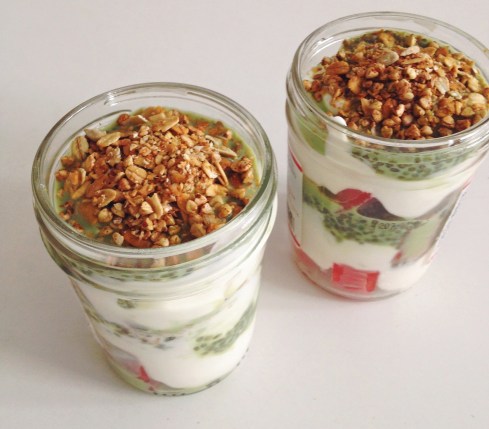
Watermelon is the epitome of a cool, juicy summertime treat. And that is just what I have been craving lately, something cool and refreshing. Since we “eat with our eyes,” it is important that my meals have lots of color in them. Watermelon’s bright pink color pairs so nicely with green foods. Notice the green cucumbers in the above photograph, and the green chia pudding in the photograph below.

These pink and green Yogurt Chia Parfaits are both fun to look at and fun to eat! Plus, chia seeds, yogurt, and watermelon are all very hydrating foods. These parfaits require a little bit of prep work, but once you have a jar of chia pudding, a container of plain yogurt, colorful fruit, and some homemade or store-bought breakfast cereal on-hand, you should be ready to roll.
Processed with VSCOcam with f2 preset

I discovered two lovely blogs this summer that both happen to be raw and vegan. Laura Miller of Sidesaddle Kitchen and Gena of Choosing Raw. Good inspiration for staying cool and creative in the kitchen.

Laura’s recipe videos are both hilarious and delicious, and her produce portraits are stunning. I made her chocolate pudding with avocado this summer, and it was a big hit around here. I also made her buckwheat breakfast cereal, which I love and highly recommend as a cereal alternative. Remember to buy raw or hulled buckwheat groats because the roasted buckwheat groats (aka kasha) have a completely different flavor and cooking requirement.

While I adore chia seeds in moderation, chia pudding has always irked me a little, with all of those tiny gummy seeds. But, since I had a few samples of matcha powder sitting in my cupboard untouched for the last six months, Gena’s matcha green tea chia pudding looked like a good way to conquer my chia pudding fears and simultaneously use up some matcha powder (the matcha powder is also good in watermelon smoothies).

I took Laura’s buckwheat breakfast cereal and Gena’s matcha green tea chia pudding and turned them into a semi-vegan, healthy, and colorful mini meal. The yogurt in these Yogurt Chia Parfaits can easily be omitted or substituted for some sort of frozen banana smoothie to make this vegan friendly.

To layer the parfaits, begin with a layer of fruit (I use a mix of cubed watermelon and quartered figs), a layer of plain yogurt, a layer of chia pudding, and a layer of buckwheat cereal mixed with granola. Repeat the layers for a full parfait. No need for exact measurements, just spoon out the layers to your liking.

IMG_3179

Matcha Green Tea Chia Pudding

from Choosing Rawmakes enough for about 4 parfaits or 1-2 servings of straight up chia pudding

I found the consistency to be a little too liquid to eat on it’s own, so I would add a touch less milk or even a scoop of yogurt to thicken it if you are going to eat it as is. Keep the portions below if you are adding this to a Yogurt Chia Parfait. 

  • 1 cup low-fat milk (I used regular, feel free to use non-dairy milk)
  • 1/2 teaspoon matcha green tea powder
  • 1/2 teaspoon vanilla extract
  • 1 tablespoon agave or maple syrup
  • 3 tablespoons chia seeds

In a blender, combine the milk, matcha powder, vanilla, and agave and blend for a few seconds until thoroughly combined. Pour the mixture over the chia seeds and stir to combine. Stir again every few minutes for the next 15 minutes. Then allow the mixture to sit for at least 1 hour (or overnight, in the fridge). Stir the mixture once more, and serve.

This chia pudding will be best within 4-5 days. Keep it in the fridge.

Yogurt Chia Parfaits

I am not giving exact portions here because you can layer these as you like. If you want more fruit, use more. If you like more chia pudding, use more. etc. etc. I like to use plain yogurt because there is already some natural sweetness in the fruit, and both the granola and the chia pudding have a little sweetener in them. 

  • Seasonal fruit-I used a mix of fresh, quartered figs and cubed watermelon
  • Plain low fat Greek yogurt- I like this brand lately
  • Matcha green tea chia pudding
  • Granola and/or homemade crunchy buckwheat groats cereal

Layer all ingredients into jars (I just use old jam jars). Begin with a layer of fruit, a few spoons of yogurt, a few spoons of chia pudding, and a layer of granola or buckwheat groats cereal. Repeat. I usually can only fit two layers into my jars.

I like to make these a day or even two days ahead. If they sit for longer, the granola may get soggy. A great on-the-go breakfast or snack!
Home Fries

28 Jul

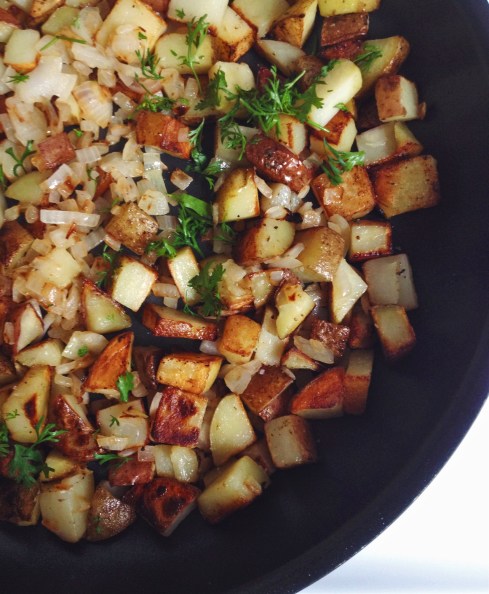
My friend and her family generously gave me some of their surplus potatoes and home-grown herbs and onions a few days ago. When I got home, I set to work steeping an ample bunch of lemon balm leaves with lemon verbena tea bags to make a pitcher of iced tea. Then, I graced my kitchen with cilantro-studded home fries.

Processed with VSCOcam with f2 preset

When I lived in the Bay Area, I used to be okay with battling the crowds and going out for a big weekend brunch complete with eggs, home fries, maybe a muffin, and always coffee.

Oh, New York. Why does it seem like every brunch place here serves french fries with eggs? There is the occasional potato pancake or limp hash-brown, but rarely, if ever, a home fry. Maybe I just live in the wrong part of town for home fries? If anyone out there has a good spot for New York City breakfast potatoes, let me know. Until then, you can find me in my kitchen on weekend mornings, creating what I feel is a proper weekend breakfast.

Processed with VSCOcam with f2 preset

The trick to making these home fries at home is to use the microwave (if you do not have a microwave, you can boil your potatoes first). Wash the potatoes, chop the potatoes, and place the potatoes covered in the microwave. This gets them par-cooked before they hit the pan to get crispy outside and remain soft inside.

The second trick is to cook the onion separately from the potatoes and to add the onion back in at the end. Since the potatoes cook much longer than the onion, taking the onion out and then adding the onion back at the end prevents the pieces from charring.

Naturally, home fries are excellent with eggs. If the season is right, I recommend slicing some baby tomatoes in half, salting them, and mixing them in with the eggs. I scrambled my eggs, but a poached or a flipped egg  with the runny yolk seeping into the potatoes is another option. If you are not into eggs, home fries + beans or home fries + fish or home fries + sausage or home fries + salad are a few of many ideas.

Sprinkle with a liberal amount of salt and pepper. Hot sauce optional.

Home Fries

recipe from the always reliable and lovely Smitten Kitchen

makes about 4 servings

You can use all butter, or you can use a mix of canola oil and butter. I dialed down the butter slightly compared to the original recipe. Like me, start with less, and add more if you like. 

1 1/2 pounds potatoes

1 onion, chopped

3 tablespoons butter, divided (or a mix of butter and canola oil)

salt and pepper, to taste

optional: fresh cilantro

Arrange potatoes in large microwave-safe bowl or large plate, top with 1/2 tablespoon butter, and cover with another plate. Microwave on high until edges of potatoes begin to soften, 5 to 7 minutes, shaking (without removing the cover plate) to redistribute potatoes halfway through cooking.

Meanwhile, melt 1/2 tablespoon butter in large skillet (I used non-stick) over medium heat. Add onion and cook until softened and golden brown, about 6 minutes. Transfer to small bowl.

Melt remaining 2 tablespoons butter (or do half butter half canola oil) in the now empty skillet over medium heat. Add potatoes and pack down with spatula. Cook, without moving, until underside of potatoes is brown, 5 to 7 minutes. Turn potatoes, pack down again, and continue to cook until well browned and crisp, 5 to 7 minutes. Reduce heat to medium-low and continue cooking, stirring potatoes every few minutes, until crusty and golden on all sides, 9 to 12 minutes (at this point, if you are making eggs to go with your potatoes, start them now). Stir in onion and salt and pepper to taste. Sprinkle with cilantro, if using.

Bon Appetit’s Chickpea, Barley, and Feta Salad

17 Jul

Processed with VSCOcam with f2 preset

My pantry is filled with grains. Grains in various packages–bags, quart containers, boxes, tupperware, and random bulk-bin bags. Grains in various amounts–a nearly full container, half empty, one or two servings left, and a serving that requires more math to calculate liquid-to-grain ratios than I would like to think about.

In my pantry I have: amaranth (I’ve been checking this post out for how to use my amaranth. I want to try popping it), bulgur (that one is in the fridge for some reason), three different kinds of oats, about two servings-worth of farina, polenta, grits, barley, a cupful of arborio rice, couscous, short grain brown rice, jasmine rice, farro, roasted buckwheat grouts (aka kasha), a handful of egg noodles, angel hair, and spaghetti. I recently polished off the quinoa and the millet, and I am exercising serious restraint not to buy more before I finish off some of my other grain odds and ends. Those darn odds and ends. At least grains have a long shelf life.

Looks like Amanda Hesser and I are on the same wavelength, though. She recently prepared lunch for her kids by using up the “various inconvenient amounts” of grains lying around. She boiled them one at a time in the same pot and, like magic, lunch was packed and pantry space was created and only one pot was dirty.

The upshot of all of this pantry overload is that overtime I built myself a arsenal of healthy, quick (and not-so-quick) pantry grains for that perfect throw-together meal. I just need a better system for storing, organizing, and keeping track of all the grains.

Processed with VSCOcam with f2 preset

One of the many grains in my pantry is barley. I bought the barley in the winter when I made this creamy chicken soup, and it’s about time that I use it again. Let’s take barley’s “heft and chew” from winter stew to summer salad.

I enjoyed a big bowl of Chickpea, Barley, and Feta Salad for dinner with a little sautéed pesto zucchini and a cold cherry balsamic shrub with a squeeze of lemon juice. Hit. The. Spot.

Leftover grain salads make a great lunch the next day, too.

Barley tip: I soaked the pearled barley in water overnight to speed up the cooking time. Soaking is also thought to enhance the nutrient absorption of the grain by decreasing phytic acid. Nutrition Stripped has a handy guide on soaking and sprouting as a quick reference.

Soaking changes the color of the barley to a slightly gray-color vs. a toasty beige, but the taste is essentially the same. Check out this Serious Eats post about soaking. Up to you if you want to soak, but I recommend it, if anything to save you some time.

Don’t have barely on hand? Feel free to use brown rice, quinoa, farro, wheatberries, pasta, or really any other grain you have in your pantry!

Chickpea, Barley, and Feta Salad

adapted from Bon Appetit

makes about 4 servings

NOTE: I didn’t use all of the barley that I cooked. That was my personal preference. Using all of the barley for this recipe seemed like A LOT of barley, and I liked having more even amounts of grains, beans, and veggies in my salad. I saved some of my leftover barley in the fridge and ate it later in the week with different accoutrement. You can also eat leftover barley as a sweet or savory breakfast. 

8 oz. green beans, halved crosswise

1 cup pearled barley, soaked overnight and drained

1 teaspoon olive oil

1/4 cup pumpkin seeds (or sunflower seeds)

1 15-oz can chickpeas, drained and rinsed

4 oz. feta cheese, cubed or crumbled

handful of fresh spinach, leaves torn

juice of half a lemon

optional: fresh ground pepper, pinch of salt, a few sprigs of fresh herbs (thyme, oregano…), a pinch of your favorite spices 

  • Cook green beans in a large pot of boiling water until crisp-tender, about 3 minutes. Using a sieve or a slotted spoon, transfer to a bowl of ice water.
  • Return water to a boil, add barley, and simmer until tender (refer to packaging for timing, mine only took about 10 minutes since I soaked it overnight); drain. Let cool slightly.
  • Heat oil in a small skillet over medium heat. Cook pumpkin seeds, tossing occasionally, until golden brown, about 5 minutes; let cool.
  • Toss green beans, barley, pumpkin seeds, chickpeas, feta, spinach, lemon juice, and optional herbs and spices in a large bowl. Enjoy!

Cherry Balsamic Shrub

14 Jul

Processed with VSCOcam with f2 preset

Have you ever tried a shrub? Not the woody plant shrub, but the “drinking vinegar” shrub?

A shrub is a drink made of fruit, sugar, and vinegar. Some shrubs also contain alcohol. The sugar, acid, and optional alcohol preserve the fruit, which was one of the original purposes of a shrub. Prior to the invention of refrigeration, a shrub syrup was a means of preserving fruit long past its picking. Shrubs were popular in Colonial America, mixed with cool water to provide a pick-me-up on hot summer days (source: Serious Eats).

I first saw shrub on the menu at Astoria’s The Queens Kickshaw about a year ago, and I finally went back to taste one.

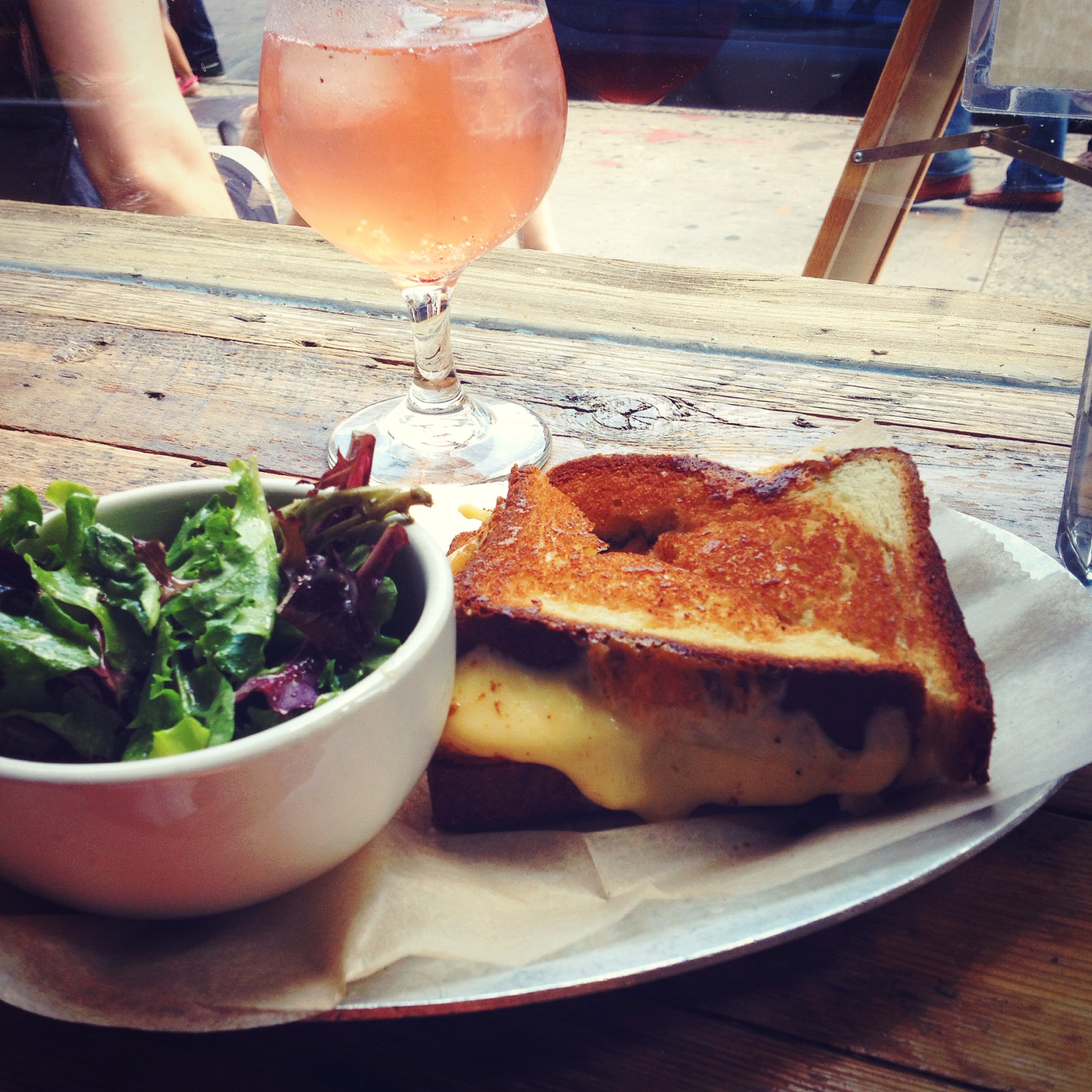
After an exciting bike ride from West Harlem through Randall’s Island and finally into Astoria, I took a pit stop at The Queens Kickshaw to scarf down a grilled cheese and a strawberry shrub (they also have golden raisin shrub available now). The shrub gets served with seltzer, and tastes like a homemade vinegary soda.

Processed with VSCOcam with f2 preset

To make a shrub, you need a hefty amount of sugar, but you also need a hefty amount of vinegar. The sugar is really there to preserve the fruit and mute the vinegar sting. If you are worried about the high sugar content, a small amount of shrub goes a long way in a drink, so you only need a little bit of concentrate to reap a lot of flavor.

To make a shrub at home: Combine fruit with sugar, let it sit, macerate, let it sit. Two days later, add some vinegar. Store at room temperature for about a week, shaking or stirring at least once a day. After a week, strain it, refrigerate it, drink it.

I now have Cherry Balsamic Shrub at the ready in my fridge for a sweltering summer day refreshment. This shrub has a strong balsamic flavor, so if you are not a big balsamic fan, use more cider vinegar in your ratio.

To drink a shrub, you can:

-Mix it with seltzer and ice. About 1 part shrub to 4-6 parts seltzer, depending how strong you want it.

-Make a shrub cocktail. I did cherry balsamic shrub + gin + seltzer. Bourbon and cherry would work, too.

-Cook with it. I added a tablespoon of cherry balsamic shrub to my clafoutis batter. Would go nice in a roast chicken, too. Or drizzled over ice cream or in oatmeal. 

 -Drink it straight up (super concentrated and strong that way). 

I am still new to the slightly fermented vinegar drink thing, but I am happy with my first batch. Of course, you can experiment with different fruits and different vinegars.  I recently tasted a cucumber serrano chile shrub at a bar that was both crisp and fiery.

Don’t forget your re-usable stainless steel straw!

Processed with VSCOcam with f2 preset

Cherry Balsamic Shrub

recipe from Carey at Reclaiming Provincial 

makes about 1- 1 1/2 cups

1 cup cherries, halved and pitted

3/4 cup granulated sugar

5-10 black peppercorns

1/2 cup balsamic vinegar

1/4 cup apple cider vinegar

Combine fruit, peppercorns, and sugar in a bowl or jar, stirring to evenly coat the fruit. Allow mixture to sit for about 1 hour, then macerate until everything is nice and broken up (I used my cocktail muddler). Cover and let sit for 24 hours. (At room temperature is fine, but feel free to stick it in the fridge too.)

After 24 hours, macerate the mixture again, crushing the fruit as much as possible. At this point, you can add the vinegars immediately, or let it sit for another 24 hours. (Carey recommends giving it the additional 24 hours, as she think this extra fermentation time does nice things for the final flavor. I agree!)

When ready, add the vinegars and stir well. Store at room temperature for 7–9 days, giving it a good stir (or light shake if using a jar) each day. When finished, pour the mixture through a fine sieve (you can use cheesecloth but I didn’t have any so I just used the sieve) then transfer to a clean jar or container. Store syrup in the fridge.

To mix: Add 1 part syrup to 4-6 parts seltzer. 1 part gin or bourbon optional.

Drink Up! Green Smoothie

2 Jul

Processed with VSCOcam with f2 preset

Well I finally gave green smoothies a whirl at home, and…they’re great!

I first started adding just a small handful of baby spinach into a smoothie, but now I’ve expanded to kale and purslane.

A few weeks ago, I got a deal at the farmer’s market: two huge bundles of greens for $5. I bought collards and kale. I cooked the collards, and used some of the kale for salads.  I washed, de-stemmed and tore the remaining kale leaves into pieces and stuck them in a ziplock bag in my freezer (my friend Brianna gave me that genius tip!). Now I have a cold green leafy veggie in my freezer for when the smoothie pangs hit (I would imagine that frozen kale is easy to toss into a soup or pasta recipe, too).

Having frozen smoothie ingredients on hand  (i.e. chopped kale, chopped banana, frozen fruit) is key to keeping things cold. Sometimes I add ice at the very end to get the smoothie extra cold, but it is not always necessary.

If you are wary of the greens, don’t worry because you can’t taste them, especially if you use strong fruits like banana or mango and a nut butter like peanut or almond. The greens just make the smoothie turn, well, green.

Tip: blend the greens with the liquid first. Get it really nice and blended before adding in the remaining fruits and accouterment. This helps decrease the leafiness of the greens. I just use a regular blender.

A half portion of this smoothie fills me up in the morning when I drink it with coffee. I also make the full serving for a light lunch before a workout. Experiment with different greens and fruits and add-ins like chia seeds. Have fun, stay cool, and drink up!

Drink Up! Green Smoothie

Makes 1 large portion, or 2 small snack-size portions

1 cup of greens (I used 3/4 cup frozen kale and 1/4 cup fresh purslane)

1 cup liquid (I used 3/4 cup low-fat milk and 1/4 cup Greek yogurt)

1 heaping cup of fruit (I used about 1 cup frozen banana pieces and 1 poached fig)

1 heaping tablespoon nut/seed butter (I used peanut butter, but almond butter is great in smoothies, too)

optional: Ice

optional: a sprinkle of chia seeds (I didn’t use any in this smoothie because purslane is high in omega-3 fatty acids)

Blend the greens and the liquid in the blender. Get it nice and blended, may take 1-2 minutes. Next, add in the fruit and the nut/seed butter and the chia seeds (if using). Blend again to incorporate. If you want the smoothie extra cold, add in a few ice cubes and blend again. You can top the smoothie with extra chia seeds if you like.

 NOTE: The full recipe, if you use nut butter, could add up to 350-400 calories, making this smoothie more of a mini meal than a snack.