Archive | salad RSS feed for this section

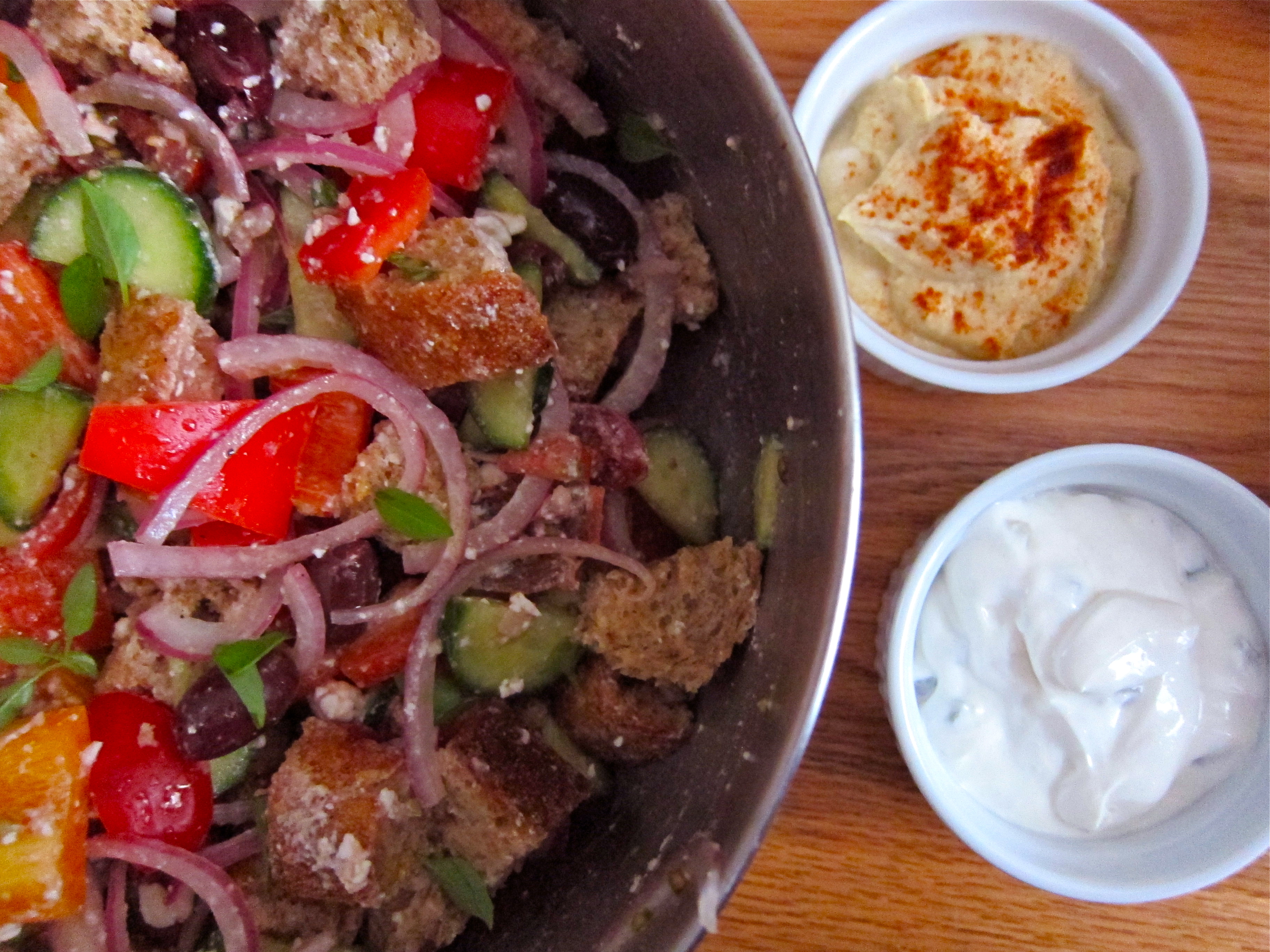
Shutterbean’s (and Ina’s) Greek Panzanella

27 Jun

IMG_0742

My gal Michelle and I are both avid followers of Tracy Shutterbean and her food, family, and boozy adventures. The day Tracy posted about this Grilled Greek Panzanella, Michelle and I went nuts! Within 1 day, we were at my place, chopping away in anticipation of enjoying a cool crunch on a hot summer day.

Intense New York City summer weather means salad for dinner. A big honking salad with lots of bread cubes and raw veggies, salty feta, and “evoo”.

Store-bought hummus and tzatziki add an easy Mediterranean touch with a bit of protein. It makes a huge difference (aesthetically) to scoop the dips into ramekins or little bowls and embellish with your own spices i.e. adding extra paprika on top of the hummus.

Giant salad. Bread. Dips. A chilled bottle of white. And a small scoop of Steve’s Blackberry Honey (vegan) ice cream to finish.

Catch the recipe over at Tracy’s blog. We used a whole wheat French Bread, but you should use whatever bread strikes you (I imagine a white seeded bread would be nice!). We lightly toasted the bread on the stove top. And we used fresh basil instead of oregano.

Tracy served her salad with lamb meatballs and grilled eggplant. YUM!

Now get chopping and eat a giant bowl of this deliciousness! Makes great lunch leftovers, too.


Summer Salad Round-Up!

24 May

Summer is about to hit us in full force, and I want us to be prepared for the potlucks, barbecues, picnics, and shenanigans to come. Pretty soon I will transition from roasting all of my veggies to shaving them into ribbons and enjoying them raw, preparing grain-based salads, bouncy pastas, light sautés, and brothy soups. It will simply be too dang hot turn on the oven.

Here are some ideas for no-cook (or very-little cook…) hearty salads to ring in the sunshine and keep us lookin’ nice and cool. Variations and substitutions are encouraged. Have fun and experiment.

IMG_0392

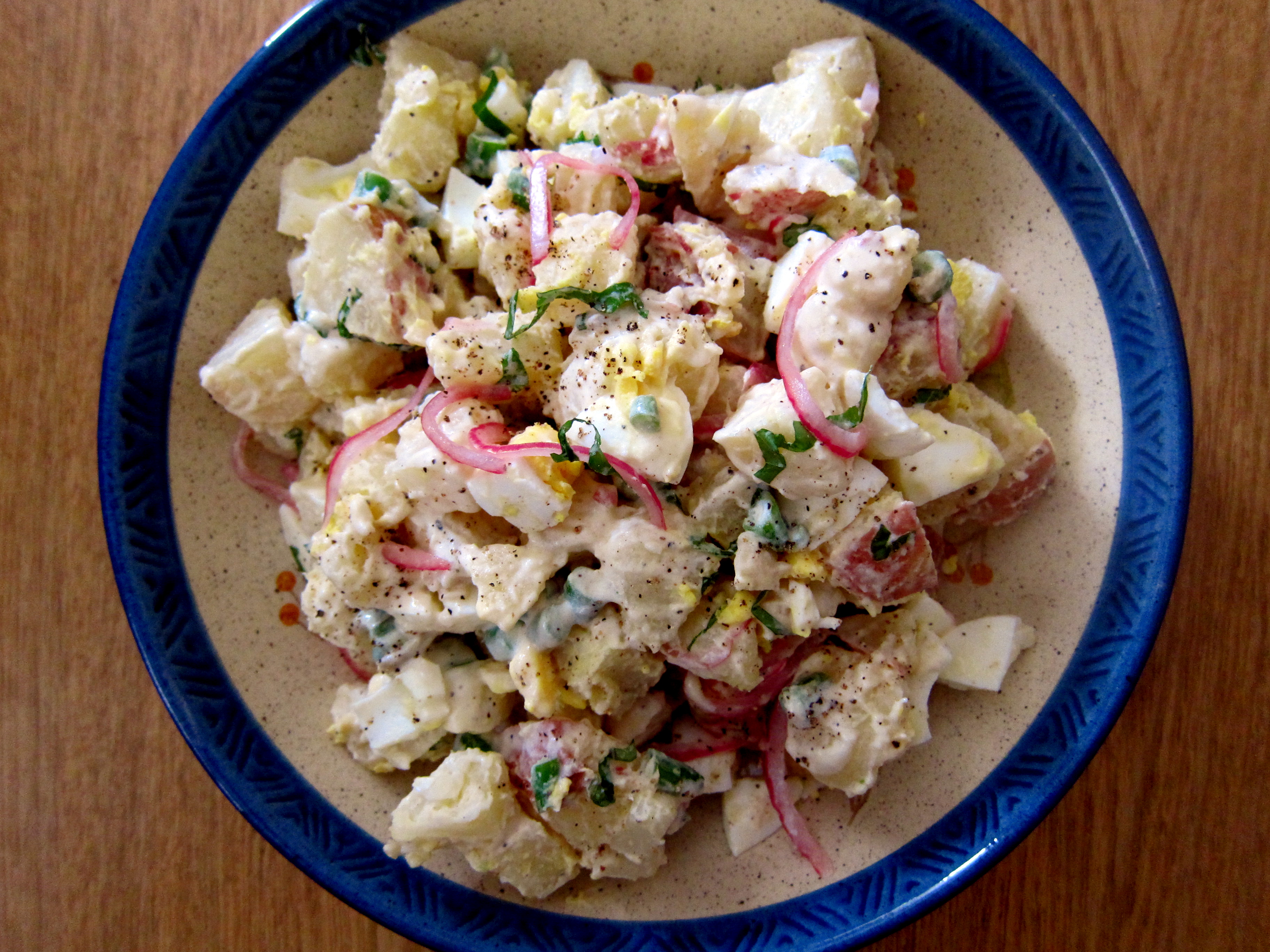
Potato Salad with Pickled Red Onion. Can you say 4th of July party?! This salad is salty, crunchy, acidic, herby, and creamy all-in-one. Heck yes.

IMG_0296

Get your fix of beans with this 3 Bean Summer Salad with Corn, Tomato, Avocado & Lime. Colorful and bright, this salad is great on its own or even used as a taco filling or chip dip.

IMG_1026

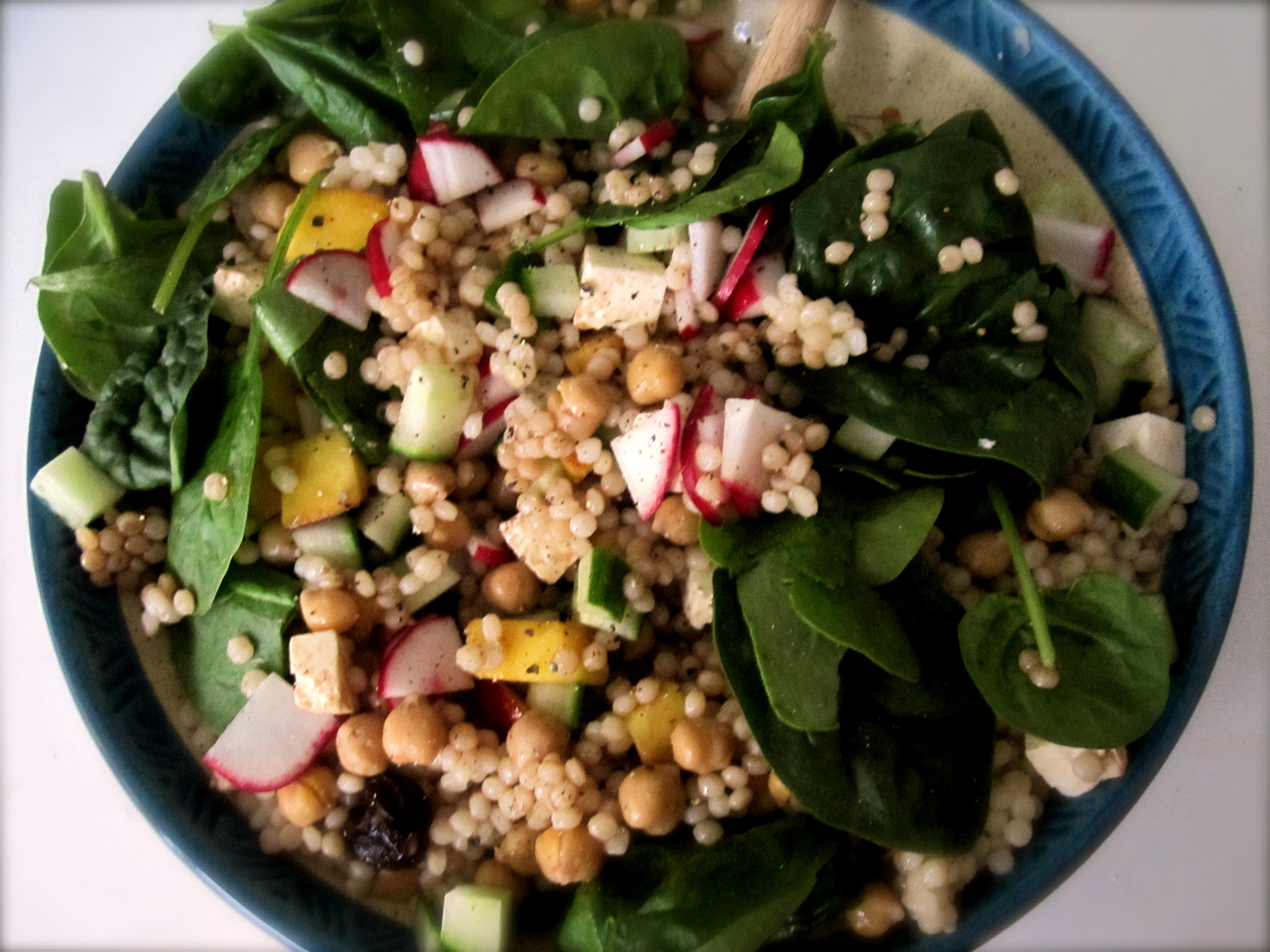
Radishes are taking over the farmer’s marktes in NY right now. Snag a bunch, slice them thin, and add them to this Israeli Couscous Salad. You could also try making a variation of this salad with a Miso Dressing.

IMG_0778

This Sweet and Savory Quinoa Salad is an old-time favorite. If it’s too hot to roast cauliflower, feel free to use whatever vegetable is easy to prepare and catches your eye. The dried fruit and Mediterranean spices remind me of summer fun.

IMG_0716

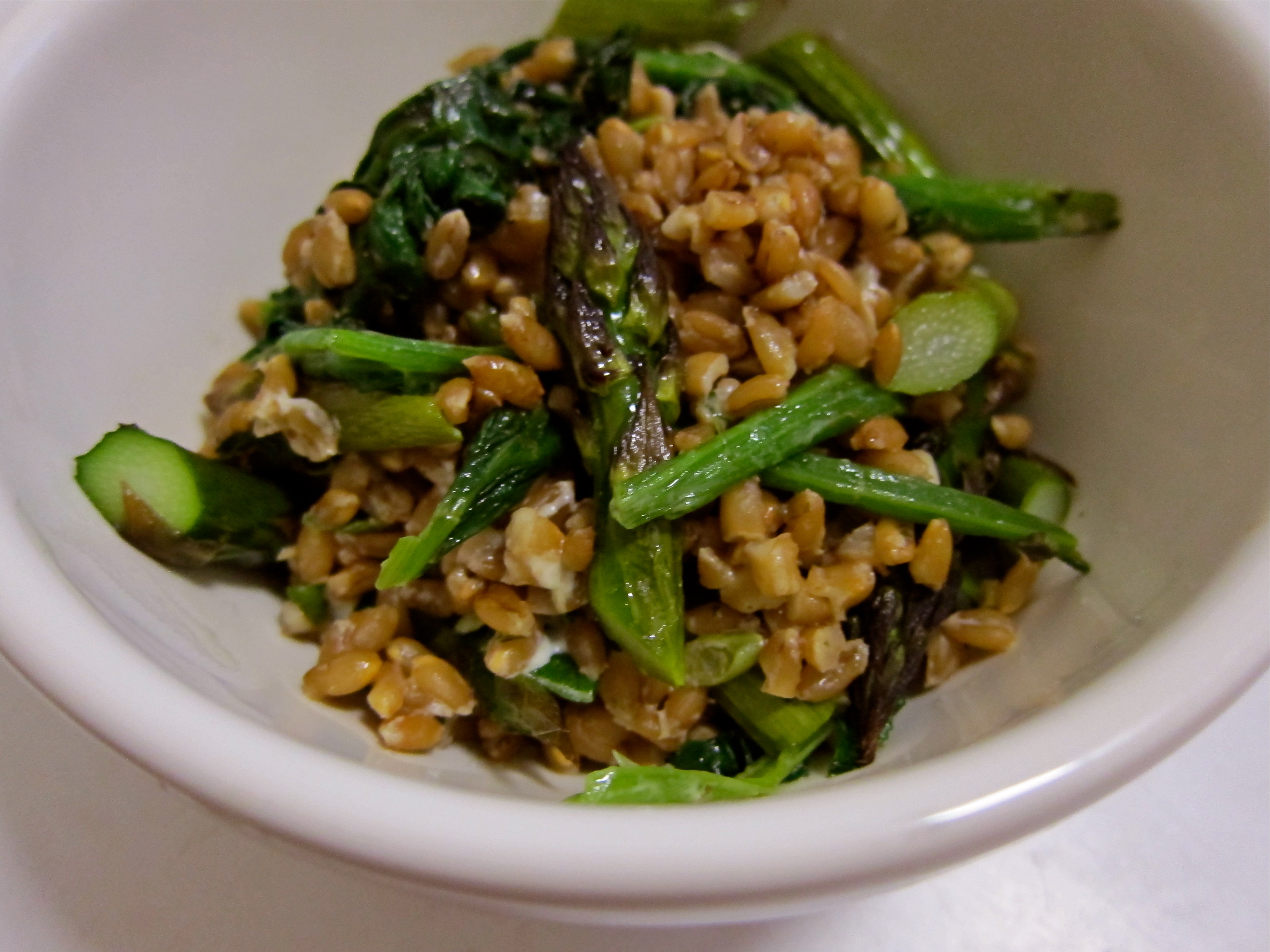
You better get your hands on asparagus NOW, before it goes out of season! Enjoy it in a Farro Salad. I recently made a variation of the potato salad above and added asparagus to it.

IMG_0750

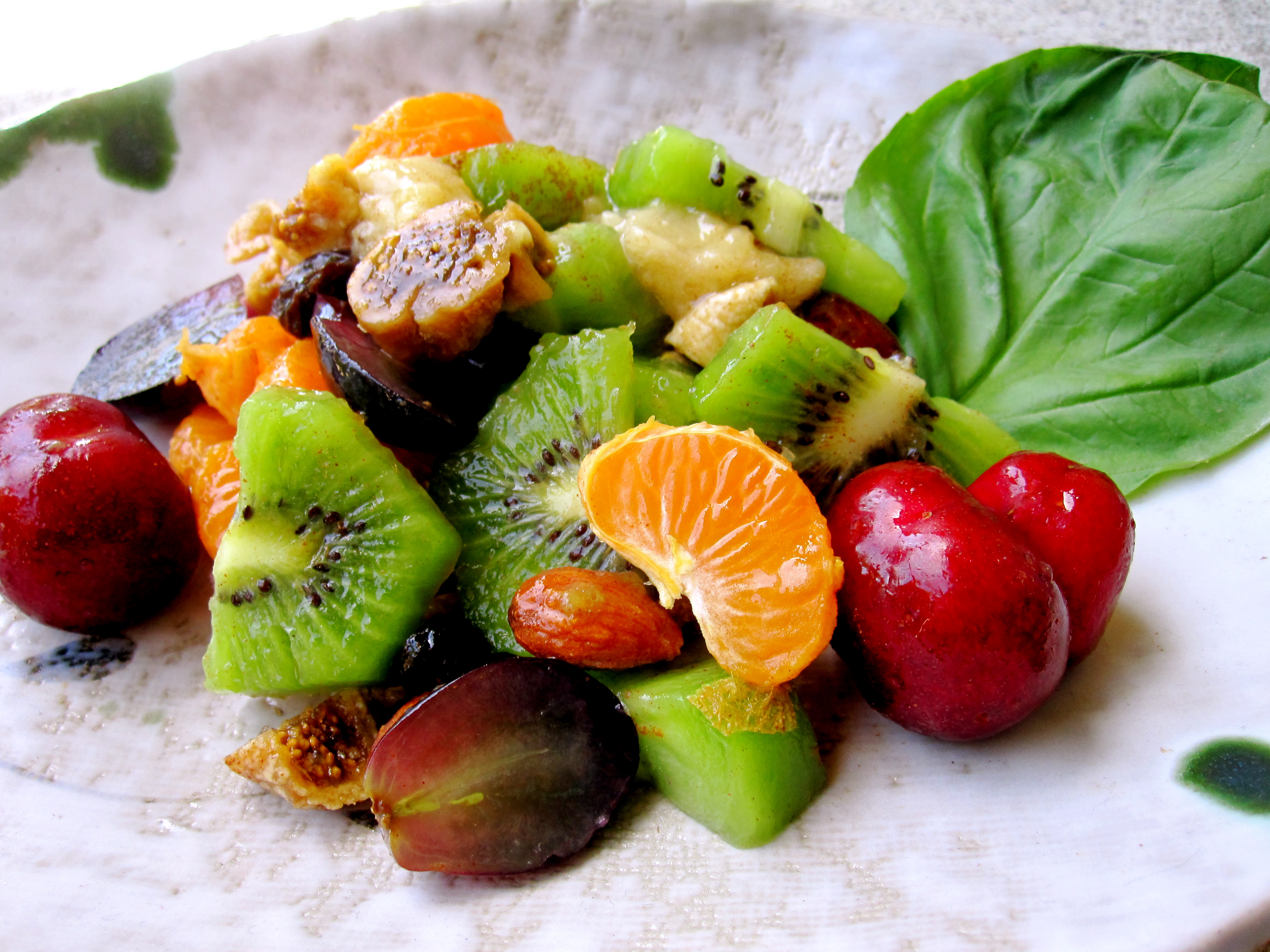
No Cook Summer Fruit Salad. I like to use a mix of fresh fruit and dried fruit, with some fresh herbs and cinnamon to pack a punch. It is hard not to eat the whole bowl in one sitting.

Farro Salad with Roasted Asparagus and Overwintered Spinach

4 May

IMG_0983

Grain-based salads are my norm, my go-to, my default. Paired with seasonal veggies and a little protein from cheese or nuts or an egg, grain-based salads are a great dinner-to-lunch-the-next-day meal.

I work at a bakery that also carries some miscellaneous knickknacks for purchase like NYC soil, cocoa nibs, kale chips, random books on bicycles, dog toys, kombucha, and…emmer Farro from Cayuga Pure Organics! After gawking at the farro for weeks and weeks, I finally brought some home to “sample” the product.

Farro is one of those nutty grains that when cooked should be soft with a slight bite to it. Farro is typically combined with Italian or Mediterranean flavors, but you could definitely experiment. Some people even like to make a risotto using farro, or to sweeten it and call it breakfast.

I recently listened to an episode of WNYC’s Leonard Lopate Food Fridays show about grains that I found very interesting…check it out here. In that same episode, he speaks to Melissa Clark from the NYTimes Dining section about packing lunch, and she has some good words to say about farro.

IMG_0715

One of my nutrition professors recommended buying the overwintered greens at the farmer’s market right now. From what I’ve read, overwintered greens are super sweet and only available for a short time…right NOW! These are greens that have been planted in the fall, their shoots and leaves die off in the winter frost, but the roots remain and lend new stems emerging from the sweet roots.

I never knew about this before, and after tasting this spinach, it really is a treat.

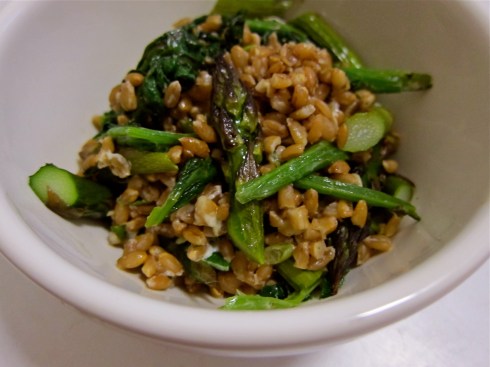
Very anxious for spring produce, which is just barely starting to show up in the markets now, I was excited to try this overwintered spinach in combination with the first asparagus of the season. Indeed this is a transition meal, as the weather is finally starting to be consistently “nice” here in NYC.

I added some Vermont Creamery goat cheese to the salad, which I imagine would be perfect with spring strawberries (which I hope to see at the market soon…we still just have apples here in NY…), drizzled with some aged balsamic.
IMG_0716

Farro Salad with Roasted Asparagus and Wintered Spinach

**NOTE: if you don’t have farro, you could always substitute with Israeli couscous, orzo, quinoa, millet, rice, wild rice, wheat berries…etc.

1 cup farro, soaked in water for at least 4 hours

1 bunch asparagus

1 clove garlic

3 handfuls overwintered spinach

1 scallion or spring onion or a 1/4 shallot, thinly sliced/diced/slivered

2 oz goat cheese

extra: salt, pepper, drizzle of balsamic, dash of pesto…

Drain the water from the soaked farro. Place farro in a pot and with water to cover the farro by about an inch. Bring to a boil, and then simmer on medium-low heat for about an hour or until soft but still has a slight chew, stirring occasionally.

Meanwhile, heat the oven to 425 degrees F. Roast the asparagus with a small drizzle of olive oil and salt for about 15 minutes. Take out of the oven, let cool slightly, and chop on the diagonal into bite-size pieces.

Heat a skillet with a little olive oil. Add the garlic and saute for 1 minute. Add the spinach and cook until just wilted, about 4-5 minutes.

To assemble: Combine the cooked farro, the asparagus bites, and the garlicky spinach. Toss with crumbled goat cheese, salt, pepper, balsamic, and a dash of pesto. Enjoy!

**You could also make a runny egg and top the farro with it!

Pan-Seared Mahi Mahi With Sautéed Leeks

16 Jan

IMG_0629

I don’t cook fish very often at home. When I do, I usually opt for salmon, and I usually roast it. I decided to try something new this time…

Mahi-mahi has very little fat, so while it is not the best choice to get those omega-3 fatty acids, it is still a great choice for a low-fat, high protein meal.

While I would have preferred to purchase my fish at the farmer’s market, I didn’t get my act together in time this week, so I purchased my fish from Whole Foods. They sell frozen, wild-caught mahi-mahi there, nicely portioned into 2 6-oz fillets. I defrosted them in the fridge overnight on a covered plate.

IMG_0747

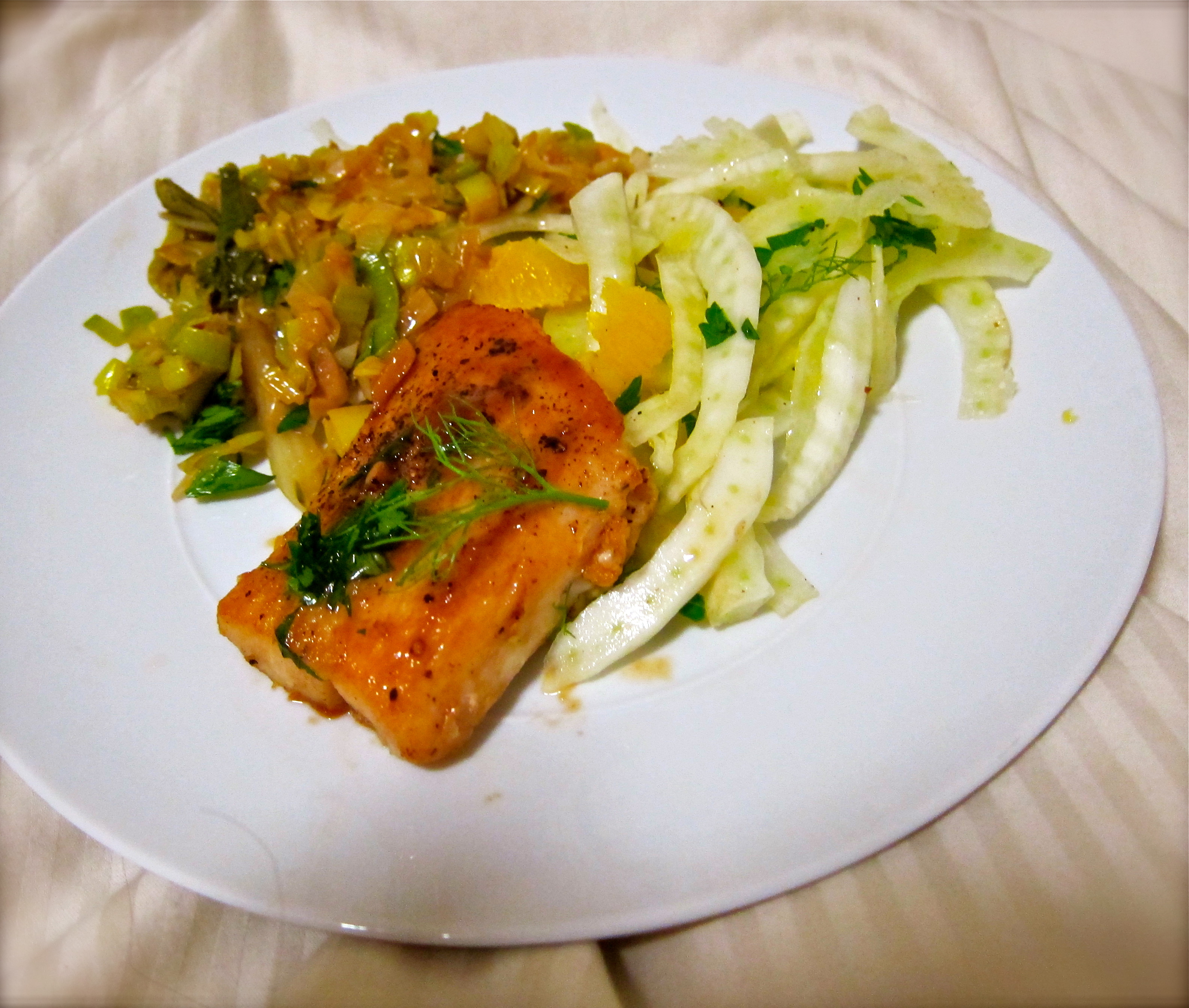
Pan-searing was a lot easier than I thought it would be. With a hot skillet, the fish was done in about 6-7 minutes. And the best part is that I got nice, golden sear marks.

I ate the fish with some sautéed leeks and a quick fennel orange salad (literally fennel, orange slivers, and a touch of OJ + olive oil/salt/pepper).

I brushed the fish with a little bit of teriyaki sauce that I had leftover from last night’s dinner (I made teriyaki bok choy over brown rice with an egg on top!) . You could also just mix together 1 tablespoon of soy sauce and a little fresh lime juice for a quick savory sauce.

IMG_0632

Pan-Seared Mahi-Mahi

Cooking method adapted from Mark Bittman’s Fish

serves 2

2 6-oz fillets mahi-mahi (I cut each fillet in half to have 4 small pieces of fish)

canola or coconut oil

fresh ground pepper

teriyaki sauce (see recipe below)

Make sure the fish fillets are at room temperature and pat them dry with a paper towel. Grind the pepper on both sides of the fillets.

Heat a 12-inch nonstick or cast-iron skillet for about 10 minutes, until smoking slightly. Add the oil, and place the peppered fish on the pan. Cook until browned on 1 side, about 3 minutes. Turn, and brown on the other side. Turn off the heat, brush the fish with the teriyaki sauce, and turn the fish in it a few times.

Teriyaki Sauce

recipe from Chloe’s Kitchen

makes a relatively large amount (maybe about a cup?); store in a jar if you have leftover sauce

3/4 cup water

3 tablespoons soy sauce

1/2 teaspoon fresh grated ginger

1 garlic clove

2 tablespoons maple syrup or brown sugar

1 tablespoon cornstarch

In a medium saucepan, whisk together all of the ingredients. Heat the sauce over medium-high heat, whisking frequently until it comes to a boil. Reduce the heat to medium-low and cook, whisking frequently, until the mixture has thickened and big, syrupy bubbles appear on the surface.

Sauteed Leeks

2 large leeks, green parts removed, washed

1 tablespoon olive oil

salt, to taste

Slice the leeks in half lengthwise, and then slice in half again. Chop the leeks into small pieces.

Heat the oil on a skillet. Add the leeks and saute for about 7-10 minutes, until soft and lightly browned. Add salt to taste.

You could even add a little parmesan or some teriyaki for more flavor. I think these leeks would be great on top of a slice of toasted bread, like a crostini. 

Tahini-Dressed Veggies

19 Sep

I recently finished a great book called Eaarth by Bill McKibben. The book discusses how global warming is no longer a philosophical or a future threat; it is our REALITY, and it is affecting our food, our health, and so much more. And especially in America, many of us are still in denial. People learn things by incrementally doing them, by taking small steps. We have to start making changes to our everyday lifestyles and change our way of thinking about our food. Our food should not have to feel like it arrived as if by magic from some far away place.

I’ve mentioned in previous posts how important it is to shop at farmer’s markets. Aside from purchasing a big portion of my food there, I have now started to save my own food scraps for compost at the farmer’s market. Basically, any fruit and vegetable trimmings, used tea bags, coffee grounds, etc. go into empty yogurt containers and plastic bags and I keep them in the refrigerator or freezer until Sunday when I take them to my farmer’s market for composting. I can live in a NYC apartment with no garden of my own, but I can still compost my food scraps.

Whew. I just had to work that out for myself. Gosh, it is just so crazy how much of my “trash” is really food scraps.

Alas, I still must gush about this beautiful creamy tahini dressing, so perfect for drizzling with vegetables, legumes, and even meat. I have the dressing recipe for you below, and you can use it however you like.

I’ve been cooking a lot lately, just forgetting to take photos. This past weekend I made a lovely meal: roast chicken with figs, an “everything” salad (my favorite kind of salad=an everything salad), challah bread with roasted garlic on the side, apple cake, and fresh whipped cream. The everything salad that I made was inspired by SmittenKitchen and had roasted delicata squash, red onion, chickpeas, pomegranate seeds, goat milk feta, and sautéed chard. All in one bowl, warm and cold, soft and crunchy, colorfully tossed together with a tahini dressing.

I had a little of the dressing left over the next day (but the rest of the salad was devoured), and drizzled it over some quickly sautéed green beans and roasted potatoes. An absolutely stunning side that highlights the versatility of the tahini dressing. I’ve basically made a “creamy” potato salad without the cream. Ding!

Tahini Dressing

adapted from SmittenKitchen and Orangette, originally from Casa Moro

1 medium garlic clove, minced with a bit of salt

1/4 cup lemon juice (1 large lemon was enough for me)

3 tablespoons well-stirred tahini

2 tablespoons water

2 tablespoons olive oil

In a small bowl, whisk together the garlic and lemon juice. Add the tahini, and whisk to blend. Add the water and olive oil, whisk well, and taste for seasoning. The sauce should have plenty of nutty tahini flavor, but also a little kick of lemon. You will probably need to add more water to thin it out later.

Serve drizzled over veggies, beans, chicken, pasta…whatever you like…