Archive | eggs RSS feed for this section

How to Poach an Egg

20 Nov


“When food is poached, it cooks delicately over the gentlest heat; not a bubble breaks the surface of the liquid in the pan”

–Alice Waters, The Art of Simple Food

The first time I ever ate a poached egg was two years ago at Café Fanny, one of my favorite breakfast spots in Berkeley.

In lieu of attempting to emulate Café Fanny’s picture perfect poached eggs, I purchased an egg poacher. I found, however, that simply pouring an egg into a low-sided sauté pan works best.

Now be warned. The whole egg poaching thing takes a bit of practice to master. I am still in the process of tweaking and refining my technique.

Ok here we go.

Poached Eggs a la Alice Waters and Julia Child
[Oeufs pochés]

Ingredients:
Egg (or eggs)
Water
Vinegar
Salt and Pepper

Step one. Crack an egg into an individual cup or bowl. Be careful not to break the yolk.


Step two. Fill a pan with water about 2 to 3 inches deep; add a large splash of vinegar. Let it come to just below a simmer: very hot, but without any bubbles breaking the surface (as you can see some of my bubbles broke the surface—c’est la vie).


Step three. Hold the cup right at the level of the water and carefully slide the egg in. This gentle entry into the water will help the egg keep its shape. Immediately and gently push the white over the yolk with a wooden spoon for 2-3 seconds (I omitted this part…just decided to have my yolk exposed this time around). After a minute you can gently stir the water to discourage the egg from sticking to the bottom of the pan. Lower the heat if the water starts to simmer.


Step four: The egg will take about 3-5 minutes to cook, depending on your egg. The white will be set but the yolk still soft. Test for doneness by gently lifting the egg with a slotted spoon and pressing it gently with your finger to feel how set the white and the yolk are.

Step five: Carefully remove the cooked egg with a slotted spoon. Sprinkle with salt and pepper.

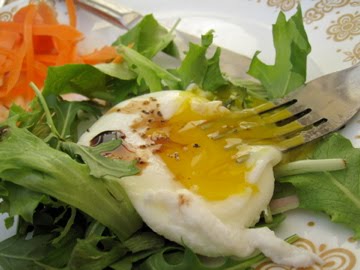
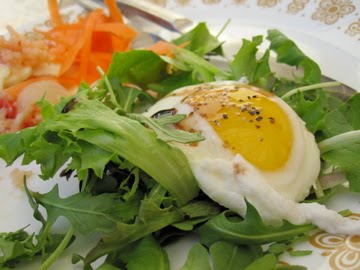
*I chose to drizzle with balsamic vinegar and place my egg over a nice green salad for a quaint lunch. A delicately poached egg atop a hearty slice of lightly buttered toast is also a favorite of mine! Yum!

**You can poach a few eggs at a time. The same recipe applies. When cooking for a crowd, freshly poached eggs can be kept for a few minutes in a bowl of cool water while another batch is being cooked.
Luscious Lemon Curd

22 Oct

Lemon curd is my new favorite breakfast/dessert condiment.

A fruit curd is similar to a fruit custard, except it is made without milk or cream. Lemon curd is a classic spread for toast, muffins, scones or pancakes. I like to spoon it over plain yogurt, too.

For a more dessert-like treat, pour homemade curd into a tart or pie shell and bake it in the oven until set. Curd can also be used as a filling for cookies, cakes or pastries, or swirl it into freshly churned ice cream or whipped cream!


I can eat it this stuff by the spoonful. It is just *~so.darn.good.~* I love the sweet and sour combination of lemons and sugar mixed with the creaminess of good ol’ butter.


I wanted to make lemon curd since the beginning of summer, and finally got around to it last Friday. It was so easy and delicious that I made it again on Sunday.

The process is like a science experiment. Sugar, lemon zest, eggs, and lemon juice get heated in a bowl over a pot of simmering water. The eggs cook slowly, thickening the mixture into a custard. Once thick, the custard gets strained through a fine sieve. Add a little butter for extra silky smoothness.

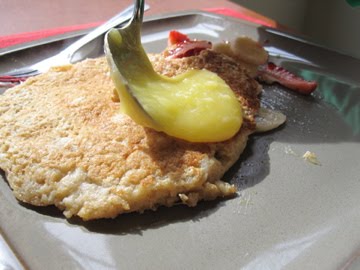
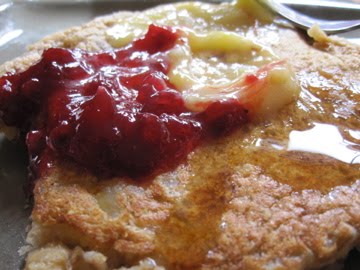
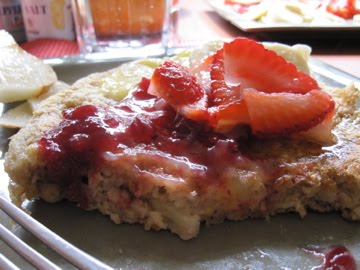
To go with the curd, my friends and I made pancakes. Really hearty and oaty ‘cakes, and topped with a triple threat of spreads—maple syrup (duh!), lingonberry jam (similar to a cranberry), and homemade lemon curd!!!!!! With walnuts and bananas mixed into the batter…YUM-O!


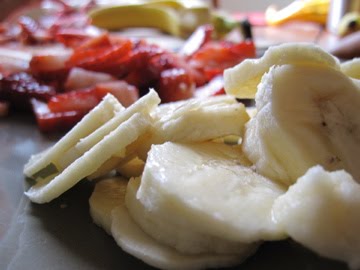
Four great friends and a lovely Sunday morning noon breakfast. Kelly made the pancakes. Sara cut up the fruit and made the mimosas. I threw together some lemon curd. Sara’s brother Sam got to eat with us in exchange for helping Sara with her physics homework and fixing the toilet 🙂

Sunday breakfast. Let’s do it again. And again. And again.

Luscious Lemon Curd

Adapted from Kiri, head pastry chef at Pizzaiolo Restaurant

This recipe is almost too easy! I memorized it immediately after the first time I made it! You do not have to be super exact with all of the measuring. Just go with the flow.

Makes about 1 ½ to 2 cups

Ingredients

½ cup sugar
lemon zest
2 eggs
¼ cup of fresh lemon juice (about 2-4 lemons)

4 Tablespoons of butter
Directions:

1. Place the sugar and the lemon zest in a heatproof metal bowl (the zest will infuse the sugar with lemony goodness!).

2. Crack your eggs in a separate bowl.

3. Measure out the lemon juice and set aside.

4. Place your bowl of sugar over a small pot of simmering water. Add the eggs and the lemon juice.

5. Whisk the mixture over the simmering water until it thickens, about 10-12 minutes.

6. When thickened, take the bowl away from the heat and add the butter, stirring until melted.

7. Strain your lemon curd through a fine mesh strainer (or chinois if you’re fancy).

8. Let it cool slightly and enjoy!

Store leftovers in the refrigerator.

Café Fanny: Start the Day Off Right!

28 Jul

Cafe Fanny Breakfast

Ah…poached eggs and café au lait in bowls!

The first time I ever tried a poached egg was at this quaint little café. Cooked on the outside, runny on the inside. Garnished with salt, pepper, and fresh herbs. Placed atop thick slices of toasted acme brand bread.


I have yet to poach an egg at home that tastes as good as the poached egg at Café Fanny.

There’s nothing like dining outside on wooden tables, with a big bowl of velvety coffee sitting next to me. I have a thing for holding a mug filled with hot liquid—it is just so comforting. The orange juice is pressed to order.

DSC_0752

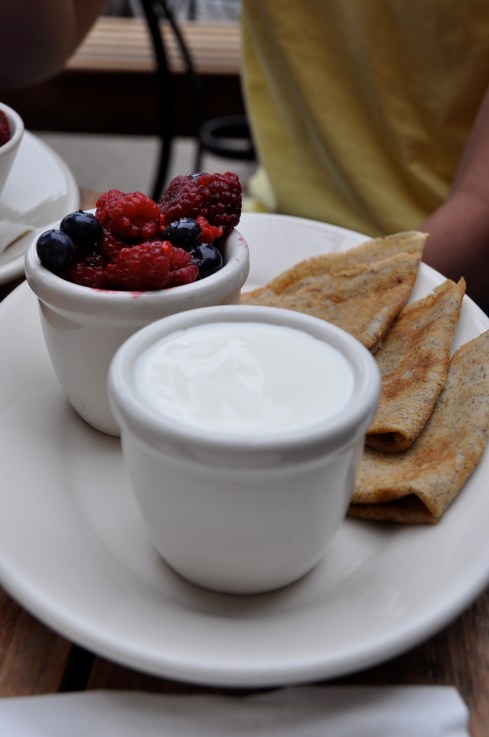
The homemade granola is famous and will leave you satisfied for hours. And the buckwheat crepes? So perfect and simple, with plain yogurt and berries.

DSC_0757

The whole motto of this café is to evoke an ideal reality where life and work are inseparable and the daily pace leaves time for afternoon leisure. Eating together nourishes the spirit as well as the body.

DSC_0758

>Bonjour! Now let’s eat crepes!

17 Jul

>
I’m learning to speak French. Well, sort of.

So far, I have mastered how to say, “where is the bathroom?” and “did you sleep well?”

Although my French speaking abilities are quite limited, I am learning a thing or two about French cooking these days. What I am realizing is that most desserts are really simple—just eggs, milk, sugar, and flour. This is the basis for famous clafoutis (just add cherries), Moelleux au Chocolat (just add chocolate), and of course, crepes!

The French rarely use baking powder or baking soda, either. The key is to whip the eggs really well!

When I think of crepes, I imagine a burly man standing on the cobblestone streets with a cart, using his special tool to spread the batter very thinly over the hot pan.

Many different cultures have a variation of the pancake-like crepe—the Italians have crespelle, the Jewish blintz, Dutch babies, African injera, the tortilla, the Indian dosa, and the Mexican sope…

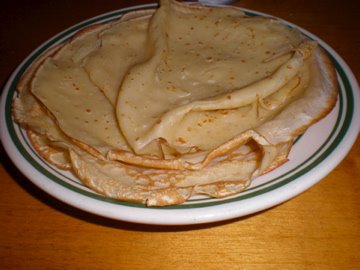
When making the first crepe of the batch, it is bound to get messed up, but have no fear! It still tastes great and the rest of them come out looking beautiful—very delicate, lacy, and lady-like, almost like an edible doily!

So for your next Saturday morning pancake and mimosa breakfast, why not impress your friends and family with some simple and light homemade crepes enjoyed on the porch with the shining morning sun?!

Crepes
Adapted from the Joy of Cooking

Makes about 5-8 large crepes depending on the size of your pan

Wet ingredients:
2 eggs, beaten well
2/3 cup milk
½ cup water
a pinch of salt

Dry Ingredients:
¾ cup flour
2-3 Tablespoons of sugar (optional)

1. Beat eggs. Add the rest of the wet ingredients, including salt.
2. Slowly sift the dry ingredients over the wet ingredients and whisk in a quick motion to be sure there are no lumps.
3. Let the batter rest. It is best to rest the batter for one or more hours in the fridge, but we did not have the patience and rested the batter for a mere 10 minutes! (the crepes still turned out great!)
4. Spray a nonstick skillet or crepe pan with cooking oil spray (we tried some with butter, but found that the butter burned too fast).
5. Place on ladle-full of batter into the pan and swirl quickly to cover the pan, getting the batter as thin as possible.
6. With a spatula, slowly check the under edges for doneness.
7. Flip the crepe over and cook a few more minutes.
8. Transfer to a plate and cook up the rest of the crepes.
9. Sprinkle a topping of your choice over the crepes, fold it up, and eat!

Sweet Topping ideas:
-butter and salt with a pinch of sugar
-jam
-fruit: strawberries, figs, bananas nectarines…
-lemon and powdered sugar
-Nutella spread
-honey

Savory egg and cheese crepes

1. Follow directions for crepe batter but omit the sugar.
2. Cook one crepe on both sides.
3. With the crepe still on the hot pan, add cheese and crack an egg in the middle.
4. Fold it over and let everything get gooey and melted!
5. Repeat with remaining batter.

More savory crepe ideas:
-Cooked spinach, onion, mushroom and cheese
-Add some pesto
-Fresh herbs and cheese
-Chicken with the works
-Artichoke hearts and sun-dried tomatoes
-Scrambled or fried egg with crumbled sausage