Tag Archives: healthy

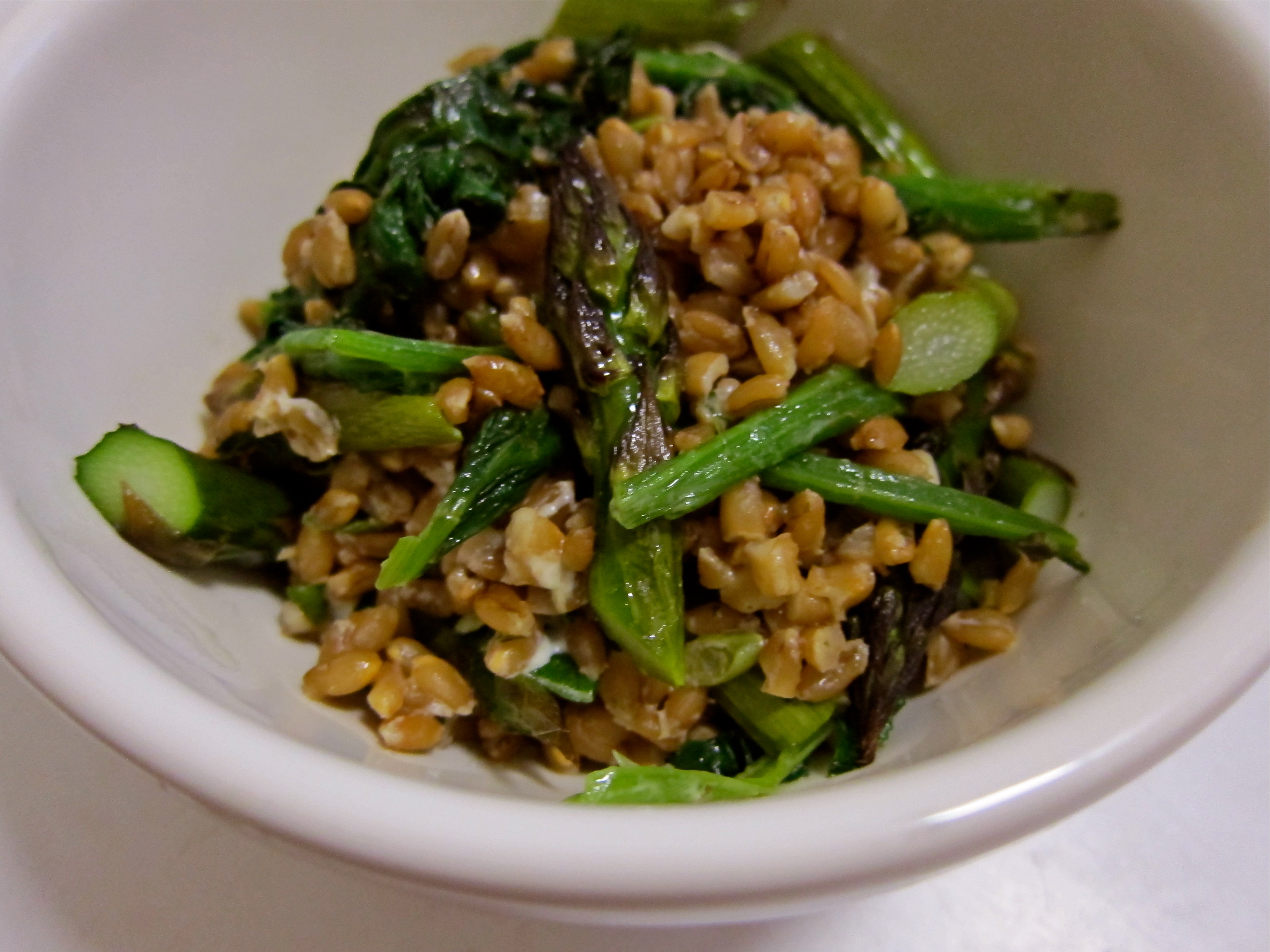
Farro Salad with Roasted Asparagus and Overwintered Spinach

4 May

IMG_0983

Grain-based salads are my norm, my go-to, my default. Paired with seasonal veggies and a little protein from cheese or nuts or an egg, grain-based salads are a great dinner-to-lunch-the-next-day meal.

I work at a bakery that also carries some miscellaneous knickknacks for purchase like NYC soil, cocoa nibs, kale chips, random books on bicycles, dog toys, kombucha, and…emmer Farro from Cayuga Pure Organics! After gawking at the farro for weeks and weeks, I finally brought some home to “sample” the product.

Farro is one of those nutty grains that when cooked should be soft with a slight bite to it. Farro is typically combined with Italian or Mediterranean flavors, but you could definitely experiment. Some people even like to make a risotto using farro, or to sweeten it and call it breakfast.

I recently listened to an episode of WNYC’s Leonard Lopate Food Fridays show about grains that I found very interesting…check it out here. In that same episode, he speaks to Melissa Clark from the NYTimes Dining section about packing lunch, and she has some good words to say about farro.

IMG_0715

One of my nutrition professors recommended buying the overwintered greens at the farmer’s market right now. From what I’ve read, overwintered greens are super sweet and only available for a short time…right NOW! These are greens that have been planted in the fall, their shoots and leaves die off in the winter frost, but the roots remain and lend new stems emerging from the sweet roots.

I never knew about this before, and after tasting this spinach, it really is a treat.

Very anxious for spring produce, which is just barely starting to show up in the markets now, I was excited to try this overwintered spinach in combination with the first asparagus of the season. Indeed this is a transition meal, as the weather is finally starting to be consistently “nice” here in NYC.

I added some Vermont Creamery goat cheese to the salad, which I imagine would be perfect with spring strawberries (which I hope to see at the market soon…we still just have apples here in NY…), drizzled with some aged balsamic.
IMG_0716

Farro Salad with Roasted Asparagus and Wintered Spinach

**NOTE: if you don’t have farro, you could always substitute with Israeli couscous, orzo, quinoa, millet, rice, wild rice, wheat berries…etc.

1 cup farro, soaked in water for at least 4 hours

1 bunch asparagus

1 clove garlic

3 handfuls overwintered spinach

1 scallion or spring onion or a 1/4 shallot, thinly sliced/diced/slivered

2 oz goat cheese

extra: salt, pepper, drizzle of balsamic, dash of pesto…

Drain the water from the soaked farro. Place farro in a pot and with water to cover the farro by about an inch. Bring to a boil, and then simmer on medium-low heat for about an hour or until soft but still has a slight chew, stirring occasionally.

Meanwhile, heat the oven to 425 degrees F. Roast the asparagus with a small drizzle of olive oil and salt for about 15 minutes. Take out of the oven, let cool slightly, and chop on the diagonal into bite-size pieces.

Heat a skillet with a little olive oil. Add the garlic and saute for 1 minute. Add the spinach and cook until just wilted, about 4-5 minutes.

To assemble: Combine the cooked farro, the asparagus bites, and the garlicky spinach. Toss with crumbled goat cheese, salt, pepper, balsamic, and a dash of pesto. Enjoy!

**You could also make a runny egg and top the farro with it!
Soba Bowls with Tea-Poached Salmon

1 May

IMG_0529

I had a great meal last weekend at cocoron in Manhattan’s Lower East Side. cocoron is a soba shop, serving up noodle bowls both hot and cold. I had the warm vege oroshi soba, which was a simple steaming bowl of soba noodles with vegetables: daikon radish, watercress, ginger…perfect with a side of spicy kimchi and cabbage with a miso-sesame dressing.

Slurping up a big bowl of noodles screams comfort, and I am on such a soba kick right now. My one qualm with soba noodles is how sticky they get when I make them at home. They are so starchy and end up mushing together. Now I know that I need to rinse them after draining to take off the excess starch.

IMG_0528

I remember when I first got the Sprouted Kitchen‘s cookbook late last summer, this Soba Bowl with Tea-Poached Salmon caught my eye immediately. It was the first thing I made from the cookbook, and after making it again tonight, I knew I had to share the recipe here.

Tea is a great medium for poaching and making sauces. I know Jackie Newgent is a big fan of using tea in her recipes, and I used it in the Rigatoni Bolognese that I posted about a few weeks back.

IMG_0527

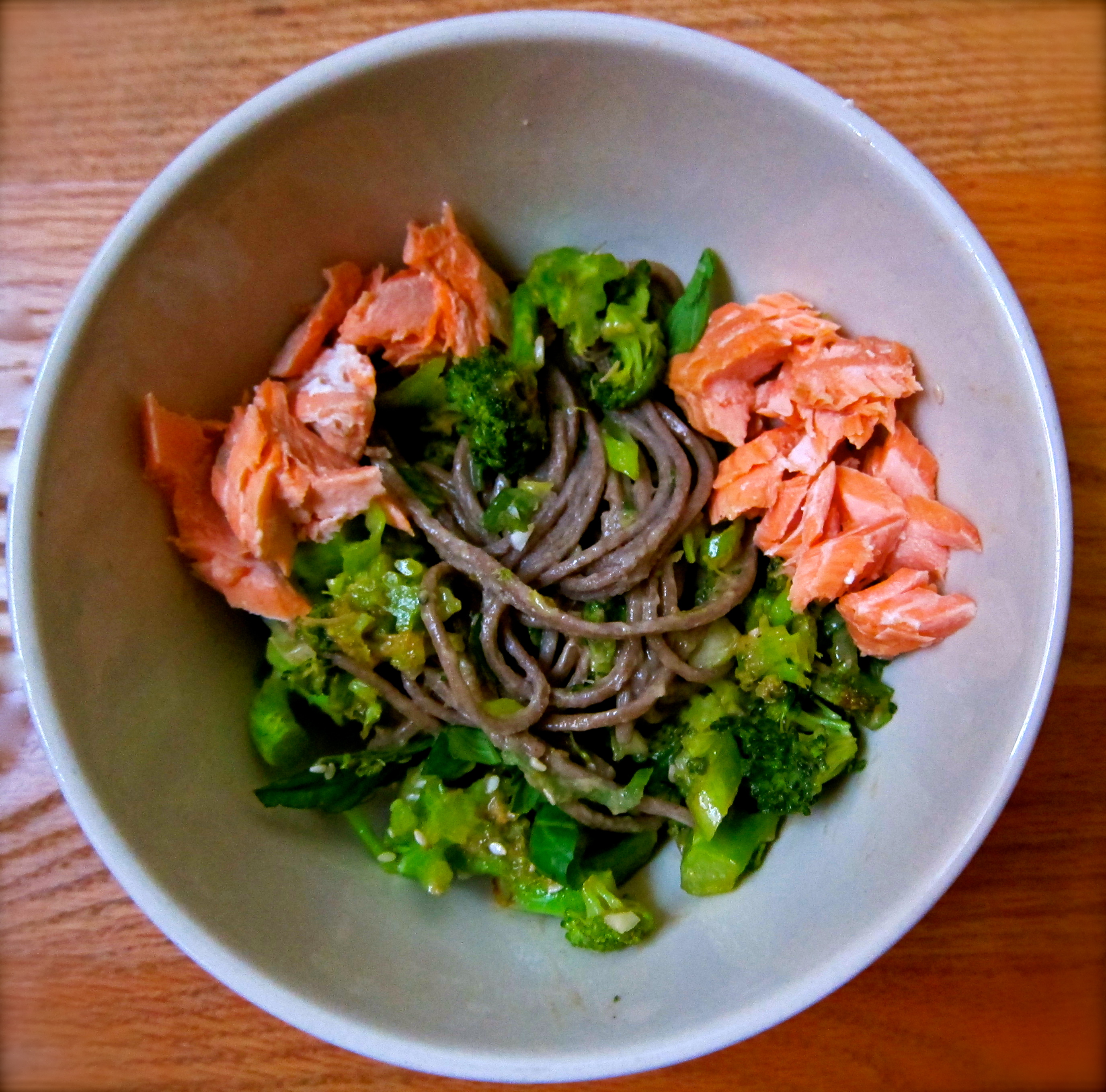
This recipe looks a bit involved, but there are really just 3 parts: roasting broccoli, poaching the salmon, and preparing the sauce. All of this happens simultaneously, so the meal really comes together quite quickly. I think broccoli goes great with this type of dish, but if you prefer to use another seasonal vegetable, maybe asparagus or bok choy or sautéed greens, feel free. If you can’t find soba noodles at your store, you can use spaghetti or rice noodles. And to make the meal vegetarian, simply omit the fish or poach some tofu…

Soba Bowls with Tea-Poached Salmon

adapted from the Sprouted Kitchen Cookbook, serves 4

Sauce:

3 tablespoons toasted sesame oil

2 tablespoons tahini

2 tablespoons agave nectar

grated zest and juice of 1 lime

3 tablespoons tamari or soy sauce

2-inch piece of fresh ginger, peeled and grated

Broccoli:

1 bunch broccoli or other seasonal vegetable

2 teaspoons extra-virgin olive oil

1 clove garlic, minced

pinch of salt

Salmon:

3 bags green tea

1 tablespoon peppercorns

1/2 cup mirin or dry white wine

1 pound wild salmon fillet

Putting it all together:

1 (8-9.5-ounce) pack soba noodles

4 green onions, thinly sliced

1/4 cup white or black sesame seeds

Directions:

Preheat oven to 425 degrees F.

Make the sauce: In a small bowl, whisk together the sesame oil, tahini, agave nectar, lime zest and juice, tamari, and grated ginger until smooth. Set aside.

Roast the broccoli: Cut the broccoli into small florets, including some of the stems. Toss the broccoli with the olive oil, garlic, and salt and spread on a baking sheet. Roast for 15 minutes, then remove from the oven.

Poach the salmon: In a saucepan, bring 1 cup water to a gentle simmer. Turn the heat down to low, add the tea bags and peppercorns and steep for 3 minutes, then discard the tea bags. Add the mirin to the poaching liquid. Gentle slide in the salmon, skin side down. Cover, and cook until the salmon is just barely cooked in the middle, 8-10 minutes, depending on the thickness of the fillet. If in doubt, it is better to undercook the salmon a bit rather than overcook it. Remove the salmon to a plate and flake it with a fork. Set aside.

Putting it all together: Bring a large pot of salted water to a boil. Cook the soba noodles according to package instructions or until al dente. Drain the noodles. In a large bowl, toss together the warm noodles, broccoli, dressing, green onions, and sesame seeds. Divide the noodles among bowls and top with a portion of the salmon. Serve.

IMG_0493

French Lentil Soup

7 Apr

IMG_0689

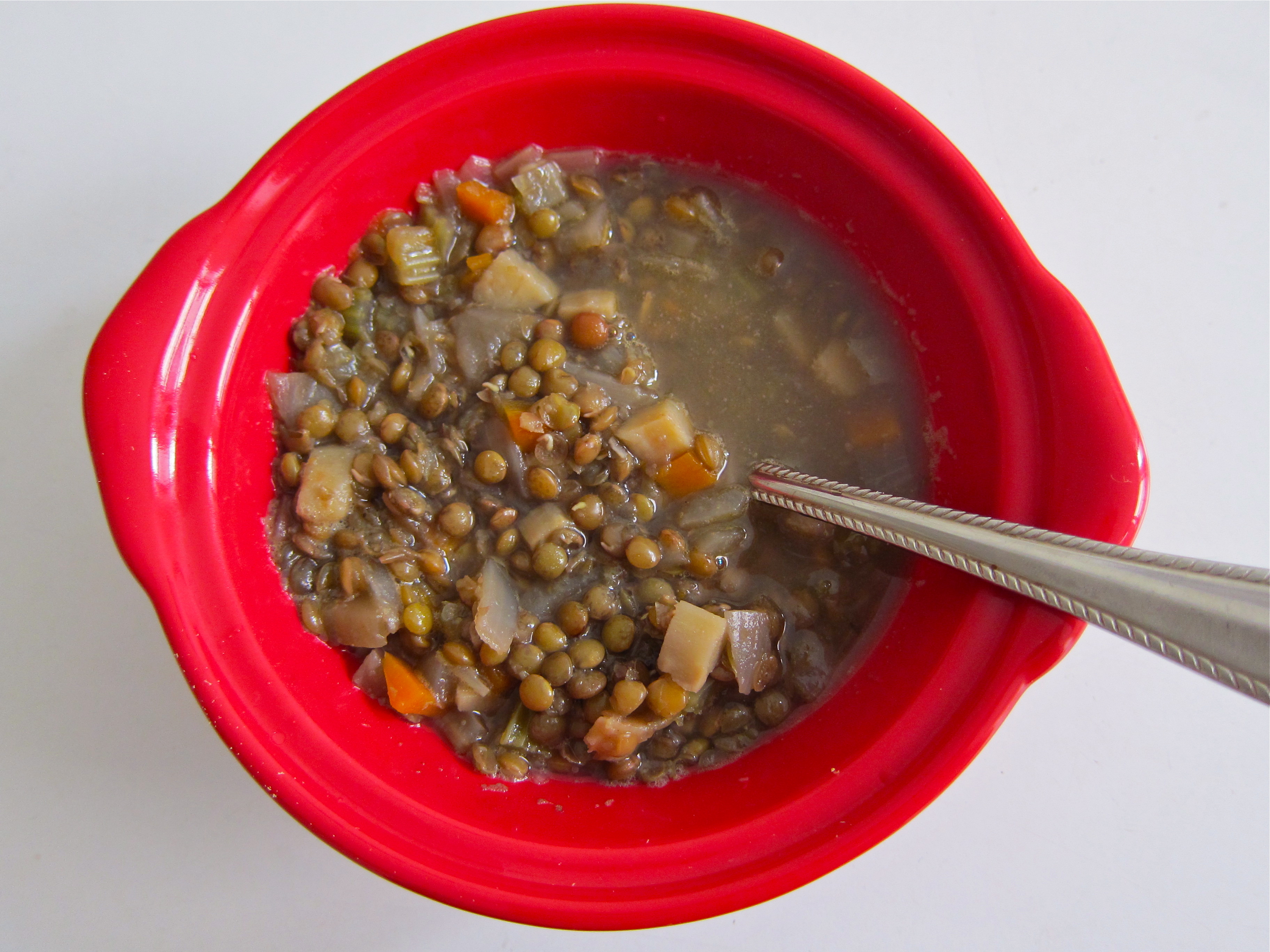
When it comes to legumes, I almost always think of beans, too often forgetting about lentils (shame on me). Lentils are so easy to make and provide a great source of plant-based protein, fiber, iron, and magnesium.

This soup is great for a light lunch or dinner, or even a mid-day snack. After a quick chopping session, everything gets thrown into a pot and simmers for an hour. This provides time for you to get other things done, allowing the soup to be left alone except for a little stir here and there.

Flipping throughAlice’s In the Green KitchenI was reminded of her “green kitchen manifesto:”

green kitchen manifesto

I understand that sometimes these tips are easier said than done, and that location and income are huge factors that affect the desire and ability to keep a green kitchen. Try focusing on 1 or 2 of these components, and see where that takes you…

IMG_0683

I purchased my French lentils in the bulk section of my local health food store. Aren’t they beauties? These girls are hold their shape nicely when cooked, and pack such a comforting flavor.

The soup is great on it’s own with some toast or pita. You can also serve it with fluffy brown rice or quinoa. A few dabs of yogurt or a drizzle of aged balsamic vinegar add some oomph. Or even a poached egg right on top, the yolk dripping right into the broth…

French Lentil Soup

4-6 servings

adapted from Alice Waters’ In the Green Kitchen

1 tablespoons olive oil

2 carrots, peeled and diced (I used 1 carrot and 1 parsnip)

1/2 onion, peeled and diced

2 celery stalks, diced

2 1/2 teaspoons kosher salt

3 garlic cloves, peeled and crushed

1 cup French green lentils, rinsed

7 cups of water or vegetable stock

Fresh ground pepper

Heat a large saucepan or soup pan over medium-high heat and add 1 tablespoon of the olive oil to coat the bottom of the pan. Add the carrots, onion, celery, and 1 teaspoon of salt and cook for about 5 minutes, until the vegetables begin to dry and soften. Reduce the heat to medium-low and cook for 5 minutes more, stirring occasionally, until the carrots are tender and the onion translucent. Add the garlic and cook briefly to release the aroma.

Add the lentils and stir while adding the water/stock and remaining 1 1/2 teaspoons salt. Increase the heat to high, bring to a boil, then reduce the heat to low and simmer for 1 hour, stirring occasionally, until the lentils crush easily and have a creamy texture. Mash some of the lentils in the pan using a whisk or a quick go with the immersion blender to thicken the soup slightly. Season with pepper. Taste and add more salt if needed.

Spatchcocked Flat-Roasted Chicken

5 Apr

IMG_0925

Buying a whole chicken is a great way stretch your dollar, as it is significantly cheaper than buying the chicken parts separately. The other day, I had 2 breasts in my hands 😉 ready to go and ended up switching them out for a whole chicken because it would save me a few bucks. I bought my chicken directly from my farmer’s market vendor, so I felt reassured that the chicken lived a relatively happy life. As Deb from the Smitten Kitchen says in her cookbook, the smaller, cleaner chickens from the greenmarket really do taste incredible, and there is no need to add anything extra.

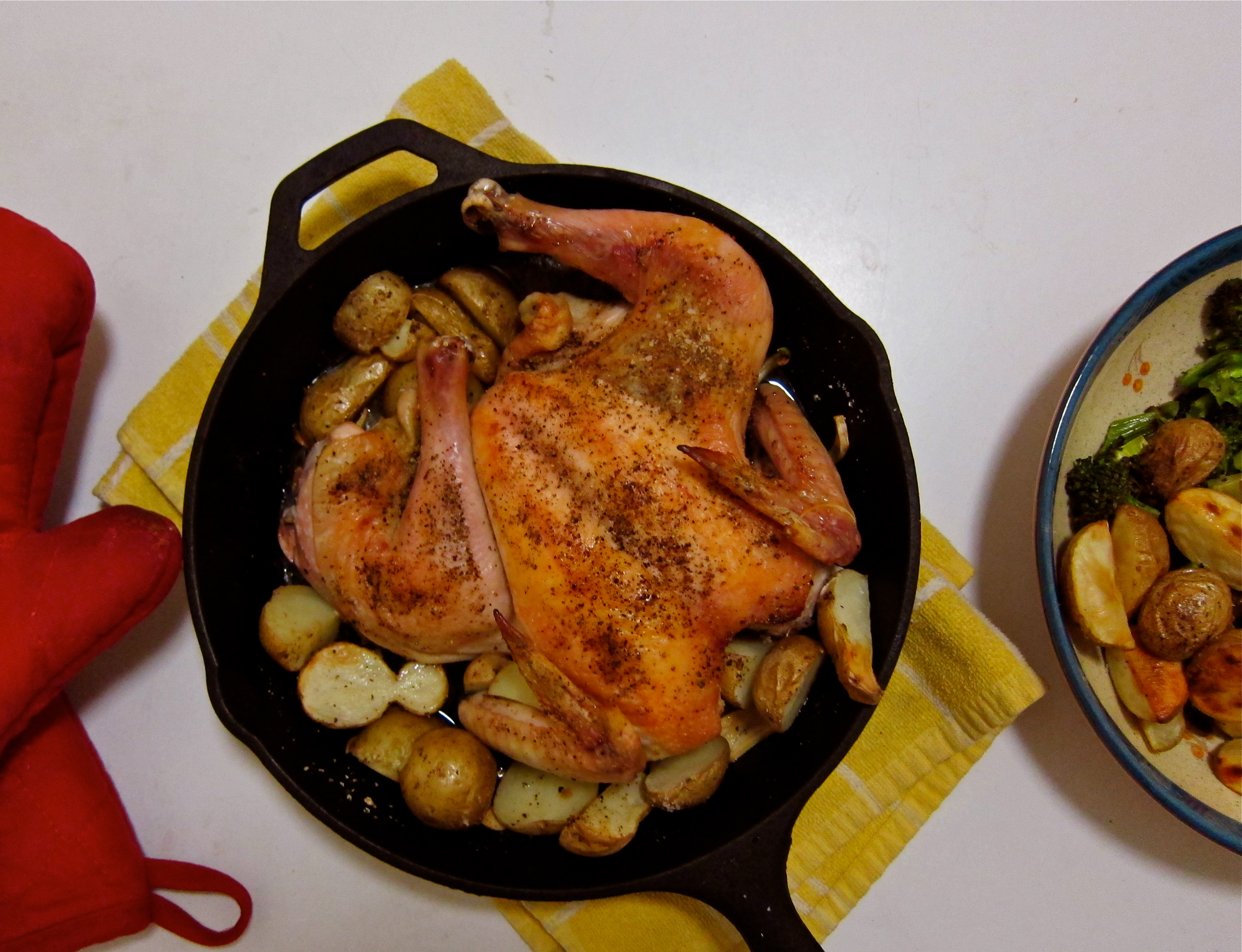
With a whole chicken at my side, it was time to start SPATCHCOCKING. I only recently heard the term while listening to Tracy talk about it on the Joy the Baker Podcast. Basically, you cut the backbone out of the chicken with your kitchen shears and lay the chicken flat in a roasting pan (check out the Adam’s spatchcocked chicken while you’re at it, and Tracy’s great pictures. Hopefully they won’t gross you out too much). Doing this allows the chicken to cook evenly in a relatively short time, and the breasts won’t overcook before the legs are ready. A great idea for holiday entertaining.

As Deb points out in the head note for this recipe, from the Zuni Cafe Cookbook, she learned to have faith that chicken skin will crisp itself in a high-heat oven, and not to load it with oils and rubs. The only oil in this recipe is used for the potatoes. The chicken skin provides all of the lubrication that the chicken needs.

From Thomas Keller, Deb learned to rain the salt down on the outside of the bird and to trust that it won’t leave the chicken too salty, just perfect. Salt is key. While it gets a bad rep. these days, salt makes a huge difference in flavoring dishes cooked from scratch.

This chicken was simple and juicy. After I few days, I shredded some of the meat and ate it with brown rice, black beans, and sautéed peppers and onions. A nice way to repurpose the leftovers.

I see a lot more spatchcocking in my future…!

IMG_0674

Spatchcocked Flat Roasted Chicken

recipe from the Smitten Kitchen Cookbook

One chicken, about 3 pounds

salt and pepper

Two handfuls of tiny yellow potatoes, washed and sliced in half

2-3 garlic cloves, peeled

2 tablespoons olive oil, for the potatoes

Preheat the oven to 450 degrees. Using a pair of sharp kitchen shears, remove the backbone of the chicken and discard it (or freeze and save it for making stock). Season the cavity generously with salt and freshly ground black pepper. Lay the chicken, breast side up, in a roasting pan (I used my cast-iron skillet), and gently pat the breast skin dry with a paper towel. Generously season the top of the bird with more salt and freshly ground black pepper. Nestle the potatoes and garlic cloves around and under the chicken, and drizzle them lightly with olive oil. Sprinkle the potatoes with salt and pepper.

Roast the chicken for 30-45 minutes, or until a thermometer inserted into the thigh registers 165 degrees. Toss the potatoes after about 20 minutes, so that they cook evenly. When the chicken has finished cooking, let it sit for about 10 minutes. Transfer the potatoes to a serving platter. Remove the legs, thighs, wings, and breasts from the spatchcocked chicken, and arrange them with the potatoes. Enjoy with another vegetable side dish for a balanced meal.

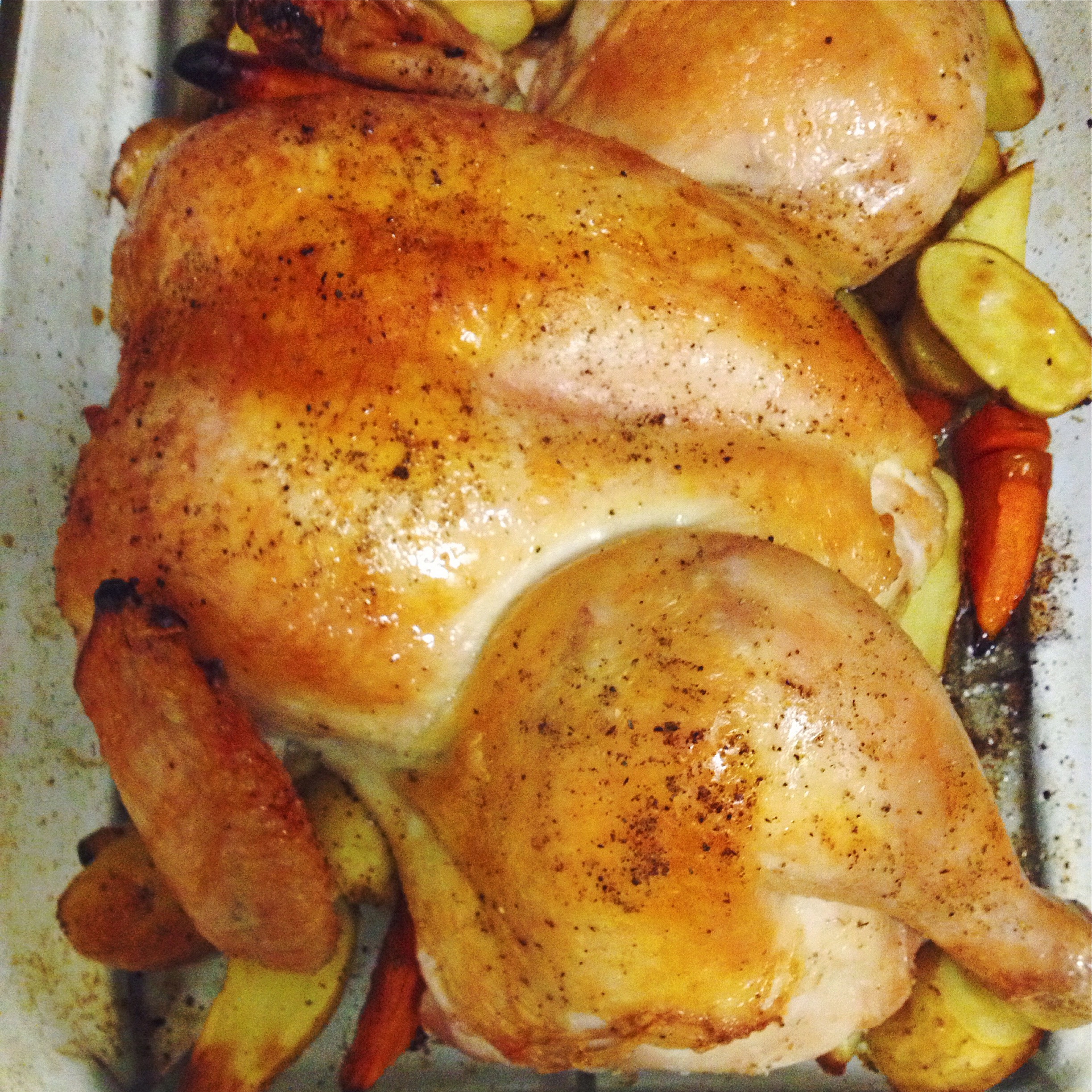
Update 9/25/14: new photo of the spatchcocked chicken baked in a pyrex. Delish!

Processed with VSCOcam with f2 preset

Healthy Carrot Breakfast Bread

2 Apr

IMG_0679

Last summer, in the blazing heat, I made an enormously decadent cream-cheese frosted layered carrot cake. It was absolutely fantastic, but sometimes I crave the challenge of making something secretively healthy (and not cloyingly sweet) that still packs that satisfying punch. In other words, I want to eat cake for breakfast and not feel bad about it.

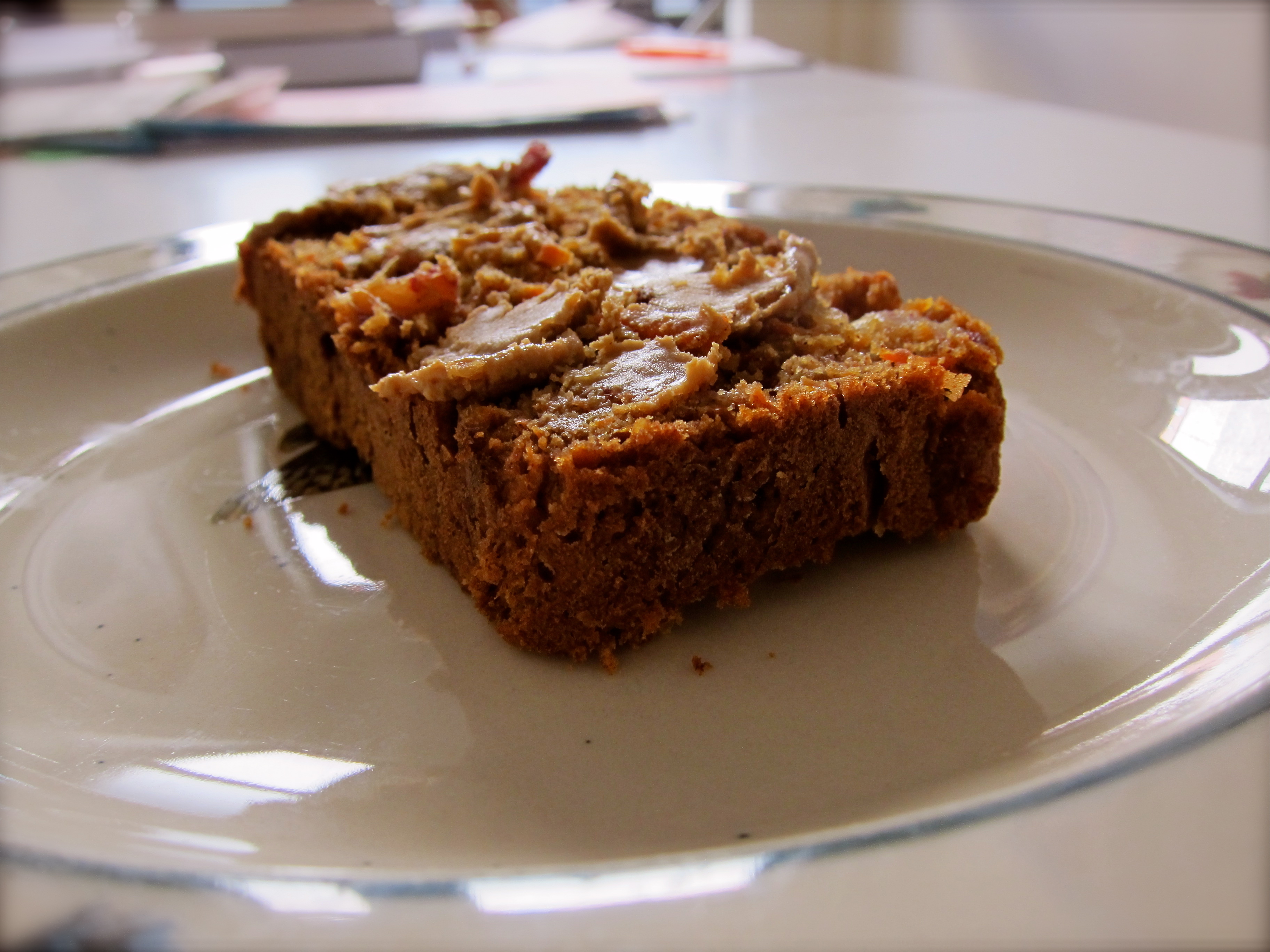
I love a good quick-bread, especially for breakfast, slathered with nut or seed butter and washed down with a hot mug of coffee. This Carrot Breakfast Bread scratches that itch for me. It’s packed with carrots, pulsed oats, and a touch of yogurt, oil, and fruit (I used up the last of the charoset that I made for Passover). It’s sweetened with agave and chopped dates, and simply feels right to eat first thing in the morning.

I was feeling lazy (and efficient, mind you), so I used my blender to speed up the preparation time. First, I pulsed my oats in the clean, dry blender. After that I grated my carrots in there, and then I mixed my wet ingredients together in the blender. Just a few pulses and some mixing together by hand and that’s it.

Of course, if you are not a fan of unfrosted carrot cake, you could always enjoy this healthy carrot bread frosted with Love and Lemon’s cream cheese frosting. It’s all about balance.

IMG_0676

Healthy Carrot Breakfast Bread

adapted from LoveandLemons

2 cups flour, I used 1c. oat flour (pulverized oats in the blender until they turned to flour) and 1c. all-purpose flour

2 t. baking powder

1 t. baking soda

spices: 1 T. cinnamon, 1/4 t. cloves, 1 t. ground ginger, 1/2 t. nutmeg, pinch of salt

1 lb. carrots, peeled

2 eggs

1/2 cup of agave

1/4 cup canola oil or coconut oil

1/4 cup plain yogurt, I used plain, low-fat Stonyfield yogurt

1/4 cup applesauce or mashed/pureed fruit such as banana

1/4-1/2 cup dates, pitted and chopped dates

Preheat the oven to 350 degrees F. Grease and lightly dust a loaf pan with flour.

I used a blender for this recipe; you could also use a food processor. Grind your oats in the blender until they look like flour. Transfer to a bowl and whisk together the 1 cup of oat flour with the 1 cup of all-purpose or whole wheat flour, baking powder, baking soda, and spices. Set aside.

Take your peeled carrots and chop them into rough bite-sized pieces. You will need to do this next step in batches: throw a small amount of the carrots into the blender and pulse until a fine chop (not totally a puree but not giant carrot chunks…somewhere in the middle). Dump the finely chopped carrots into a large bowl. ***Note: you could also grate the carrots by hand, but I was lazy.

Next in the blender go the eggs, agave, oil, yogurt, and applesauce. Pulse for about 20 seconds until everything blends together. Pour this mixture into the carrots and stir it all together with a rubber spatula.

Add the dry mix to the wet and fold with a rubber spatula until it all comes together. Fold in the chopped dates. Dump everything into the prepared loaf pan. Sprinkle with some cinnamon and maybe a dash of sugar on top. Bake for about 50 minutes to an hour, rotating half-way through baking.

Serve for breakfast with some sunflower or almond butter and a hot mug of coffee or tea.