Archive | fruit RSS feed for this section

>Fun in the Garden + Salmorejo: Spanish Tomato and Bread Soup

11 Sep

>
Just the other day, I spent some quality time in the garden with my great friends Michelle and Natasha. Natasha’s family lives in beautiful Napa Valley, California. Natasha planted a vegetable garden over the summer, and we came back to give it the love that it deserves.


It felt like we had struck gold, in the form of tomatoes. She planted sweet 100s, a cute little cherry tomato that tastes unbelievably sweet. I could not stop popping them in my mouth, it was like a little burst of sweetness every bite!

Oh my goodness so many tomatoes, it was almost overwhelming!

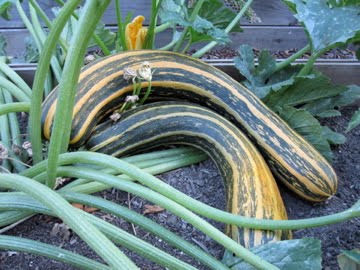
And, check out the ginormous squashes:

Those squashes were about as long as my torso. And heavy, too!

So it has been 2 days since we picked the tomatoes, and most of them were already starting to go bad today. You really got to pick ’em and eat ’em quick. I sorted through the beauties and separated them from the good ones to make Salmorejo, a Spanish tomato and bread soup from the Andalucian region, specifically Cordoba.

This soup literally took 10 minutes, and involved no cooking! Just throw the tomatoes, some bread (crusts removed), garlic, a piece of bell pepper, and a drizzle of olive oil into a blender then strain it through a fine mesh sieve. The soup is meant to be served chilled. It is a type of gazpacho, a smoother, almost creamier type of gazpacho. The bread helps to achieve that creamy feel and it helps to thicken the soup as well. You can save the crust of the bread to toast and serve as little dippers for the soup.

I ground up some fresh black pepper in and over the top of my soup. Mmm.

Salmorejo

adapted from BakingBites

serves 1 (but can be easily multiplied)

1 lb of tomatoes (any kind you like, I was lucky to have some from the garden)
1 4-inch piece of baguette, crusts removed
1/4 piece of bell pepper
1 garlic clove
1/2 tablespoon sugar
salt and pepper, to taste
1/4 cup olive oil

Combine everything except for the olive oil in the blender. Blend at high speed until smooth. With the blender running, stream in the olive oil. Add more salt and pepper if needed. Strain through a fine mesh sieve and refrigerate until chilled.

The soup can be prepared one day in advance and stored in the refrigerator.

**NOTE: You can save your bread crusts, toast them, and serve with the soup.

>Homemade Apple Spice Sauce

7 Sep

>

Tomorrow night is Rosh Hashanah, the Jewish New Year.

Last year, I made this wonderful challah bread on Rosh Hashanah for my 60 housemates. This year I have scaled down to live in a little apartment with 2 friends, so I won’t be making 8 loaves of challah bread.

I was, however, fortunate to receive a beautiful bag of Fuji apples as a gift last week. How fitting for the Jewish New Year! Apples and honey are two big symbols for this particular holiday, meant to bring in a SWEET new year.

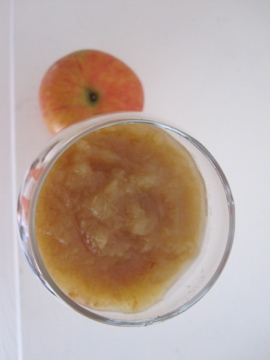
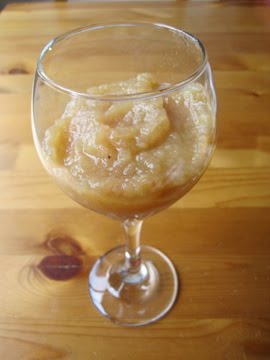
I chose to make a big batch of gingery-cinnamony-nutmegy applesauce. Homemade applesauce is the way to go my friends. And you can serve it in pretty wine glasses for an elegant touch. Maybe make some basic cookies as an accoutrement, or place a plate of dates on the table to eat with the applesauce. Dates could also be a great Rosh Hashanah food, sweet and satisfying!

I also like to put this homemade applesauce in my yogurt or oatmeal for a nice breakfast. Or it would go great as a sweet sauce with roast pork or chicken (I have heard that added a touch of butter to the applesauce takes it to that next level, if ya know what I mean!).


Homemade Apple Spice Sauceadapted from Allrecipes

10 apples, peeled, cored, and chopped
1 3/4 cups water
1/4 cup + 1/8 cup sugar
2 teaspoons cinnamon
1 teaspoon freshly grated nutmeg
1 2-inch piece of ginger, minced finely
pinch of salt

Combine everything in a saucepan or pot. Cover and cook on medium heat for about 20-30 minutes, until the apples are soft. You may have to adjust the amounts of your spices if you think it needs more. Let cool for about 5 minutes, then pour it in batches in a blender and pulse until it reaches the desired consistency (my apples were so soft it literally only took me one pulse per batch).

The Open Markets in Lucerne (Luzern), Switzerland

29 Aug


High up in the Swiss Alps on a Mountain named Pilatus, I stood, freezing (literally) my little tootsies off. A 30+ minute gondola ride took me 7000 ft high to a place where snow reigns strong in mid-June.


And when I say high, I mean high. High enough to see (sort of) the most spectacular view of Switzerland (or at least part of it).


And I especially enjoyed the little yellow flowers peaking through the snow, trying to break free.


After getting back down to a part of Switzerland where it was not snowing, I found myself in the heart of the loveliest town Lucerne, a town where the lake meets the city meets the mountains.


Just beautiful. The snowy mountains were far enough away that I could feel warm again, and I could still admire them from a distance. And there were swans, too!


So, what’s was for lunch? How about a ginormous baked good from the local backeri (bakery)?


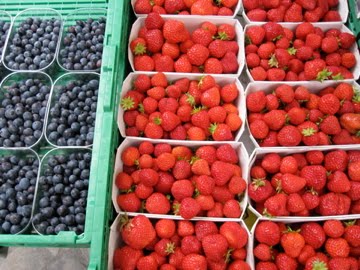
Ok, ok, maybe some fruits and veggies would be nice, too. I found myself perusing the open markets in Lucerne…there were lions and tigers and berries, oh my! Alright settle down, so there were no tigers. But lions and berries, yes and yes.


There were tomatoes that looked like grapes, veiny grapes:
More tomatoes, of the heirloom variety I suppose:


There was white asparagus and chanterelle mushrooms:


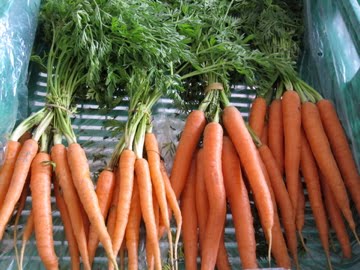
Beautiful bundled carrots:


Aaaaaaaaannnnnnddddddd…FIGS IN MY BELLY!!!!!!!!

Dried, fresh, purple, green. Feiges (figs)! Oh, how I love thee.
I bought loads of chocolate to savor between (and after!) meals, I went to a touristy fondue dinner complete with a yodeling show and alphorn blowing, and I even ate sushi in Switzerland (I know, not the most authentic, but sometimes you just crave sushi).

Menu from the fondue dinner


Switzerland was such a blast. I would definitely go back, especially to see some of the other great cities that the country has to offer.

>Pink Pearl Apples

29 Aug

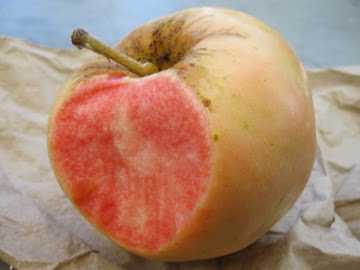
>One year ago, I bit into the most magnificent apple I have ever seen/tasted. It was pink, on the inside! Pink flesh, wow, I could not believe it. A delightful surprise to bite into.

I have since learned that this apple is called a “pink pearl.” Fitting, eh?

The season is upon us, folks: late August through mid September. So keep those eyes peeled for the next round-up of pink pearls.

>Strawberry Rhubarb Pie

26 Aug

>

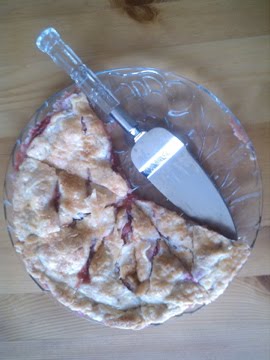
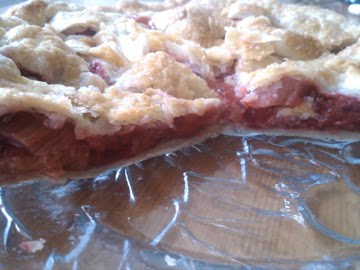
Strawberry rhubarb pie. Lovable lovable pie. Even my Comcast installation guy got to eat a slice of pie, lucky guy, eh? Let me warm you a slice and give you a scoop of my homemade honey vanilla ice cream. Or I can wrap you up a piece to go…How about some pie for breakfast with a nice mug of milky coffee?

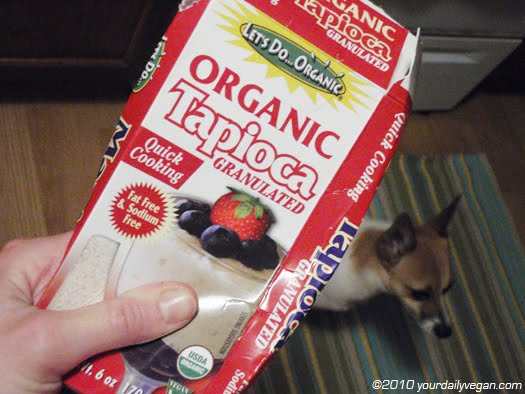
One might ask, “how do you prevent this sought-after sweet treat to keep from getting soggy and overly juicy?” Quick-cooking tapioca does the trick. It is tasteless and helps the juicy berries and rhubarb from turning your pie into a messy ordeal. Quick-cooking tapioca is a thickening agent that helps the pie filling gel together. Some folks use cornstarch as an alternative thickener, however both myself and a few other food bloggers who I confirmed with agree that quick-cooking tapioca is the way to go.

(P.S. This is not my photo, nor is this my dog; image taken off of google images)

I made my pie in a tart shell pan, but you can also use a pie plate, it just depends on your preference. If you decide to use a tart shell pan, it is a good idea to cut out a circle of parchment paper and line the bottom of your pan with the parchment to ensure that your crust does not stick to the bottom of the pan.


Oh, and whatever you do, try not to eat the pie straight from the oven. Wait until the pie is COMPLETELY cool before you cut into it. Trust me, it is worth the wait. Otherwise, you will be sorry that you got sloppy messy slices of pie that are just not as pretty anymore.

So, let us begin our adventure in pie…


Tart and Pie Dough

from Alice Waters’ The Art of Simple Food

Makes two 10-ounce balls of dough, enough for two 11-inch tarts or one double-crust 9-inch pie

Have measured:
1/2 cup ice-cold water

Mix together: 2 cups all-purpose unbleached flour 1/2 teaspoon salt (omit if using salted butter)

Add:
12 tablespoons (1 1/2 sticks) cold butter, cut into small (1/4-inch) cubes

1. Cut or work the butter into the flour with a pastry blender or your fingertips, leaving some of the butter in fairly large, irregular pieces. This will take 1 or 2 minutes. (Or mix for no more than a minute, at medium-low speed, in a stand mixer fitted with the paddle attachment.)

2. Pour in three quarters of the water, stirring all the while with a fork until the dough begins to form clumps. (In the mixer, turn the speed to low and pour the water down the sides of the bowl, mixing for 30 seconds or less.) Keep adding water if needed.

3. Divide the dough in two, bring each part together into a ball, and wrap each ball in plastic. Compress each ball, and then flatten them into disks. Let rest, refrigerated, for 1 hour or longer.

Strawberry Rhubarb Pie

from SmittenKitchen

1 recipe pie/tart dough (enough to make a double-crust pie) (recipe above)
3 1/2 cups (about 1 1/2 pounds, untrimmed) rhubarb, in 1/2-inch thick slices
3 1/2 cups (about 1 pound) strawberries, hulled and sliced if big, halved

1/2 cup granulated sugar
1/4 cup light brown sugar
1 tablespoon lemon juice
1/4 teaspoon salt

1/4 cup quick-cooking tapioca
2 tablespoons unsalted butter, cut into small pieces

1 large egg, beaten to blend with 1 teaspoon water or cream (for glaze)

granulated or raw sugar (for sprinkling)

Preheat oven to 400 degrees F. Take one of your dough disks out of the refrigerator and let it sit out for 15-20 minutes until it becomes malleable but not soft (it should still be fairly cold). On a well-floured counter, roll half of pie dough into a 12 inch round and carefully transfer to a 9-inch pie plate or tart pan. Place it in the refrigerator while you prepare the filling.

Stir together rhubarb, strawberries, sugars, lemon, salt, and tapioca in a large bowl. Mound the filling inside the bottom pie crust and dot with bits of unsalted butter.

Roll the second half of pie dough into an 11-inch circle and cut decorative slits in it. Transfer it to the center over the pie filling. Trim the top and bottom pie dough so that their overhang beyond the pie plate lip is only 1/2-inch. Tuck the rim of the dough underneath itself and crimp it decoratively.

Transfer pie to a baking sheet and brush beaten egg mixture over the dough. Sprinkle with sugar. Bake for 20 minutes, rotate the pie, then reduce temperature to 350 degrees and bake for an additional 25 to 30 minutes, until the pie is golden and the juices bubble visibly.

Transfer pie to a wire rack to cool. When full cool (several hours later or overnight) the juices gel.

**The pie should keep for up to three days at room temperature.